
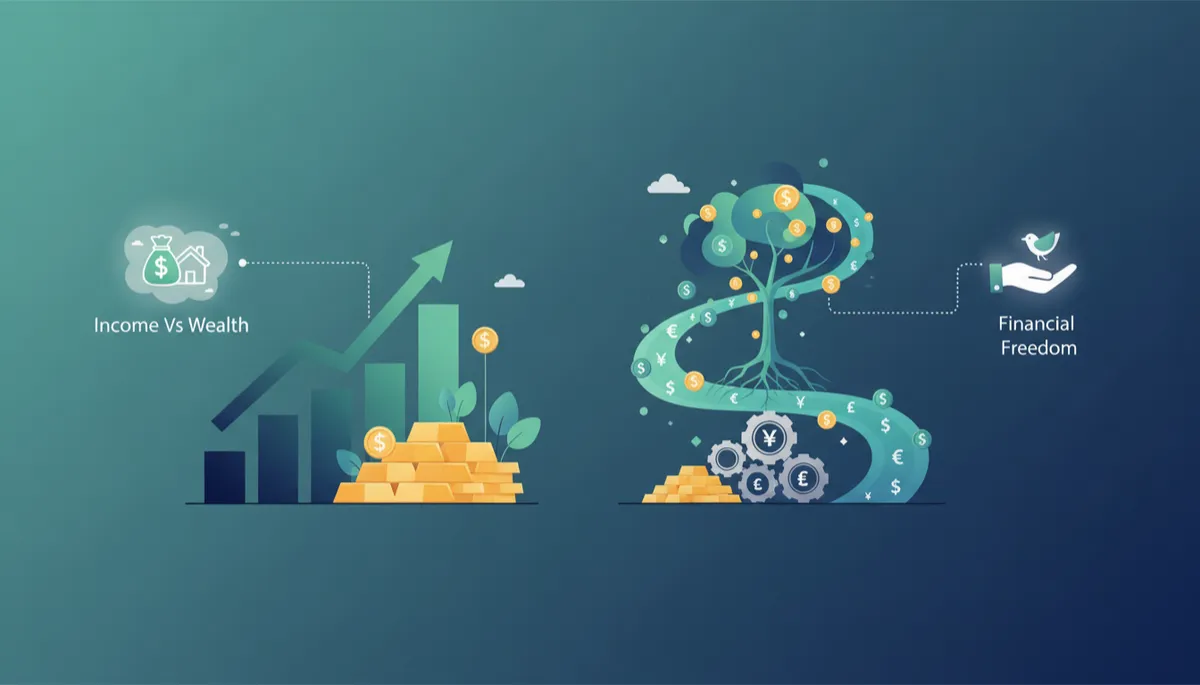
Transform Business Income into Personal Wealth
Personal Finance, Income Vs Wealth, Financial Freedom
Turning Business Income Into Personal Wealth
Many business owners work incredibly hard, generate impressive revenue, and still feel financially stuck. The missing link is understanding the difference between income and wealth, and learning how to convert active business income into long-term, lasting wealth that supports true financial freedom.
Income Vs Wealth: Why the Distinction Matters
A profitable business can create the illusion of financial success. Clients are paying on time, cash is flowing, and your personal lifestyle has likely improved. Yet, without a deliberate strategy for wealth accumulation, high income can disappear as quickly as it arrives. Understanding Income Vs Wealth is the first step toward taking control of your financial future.
What Is Income?
Income is the money that flows to you or your business on a regular basis. For business owners, this may be:
Salary or drawings you pay yourself from the business
Dividends or profit distributions from your company
Bonuses, commissions, or performance-based payouts
Income is about cash flow today. It pays your bills, funds your lifestyle, and keeps the business running. It is essential, but it is not the whole story of your financial life.
What Is Wealth?
Wealth is the value of what you own, minus what you owe. In simple terms, it is your net worth. Wealth is built from assets that can grow, generate income, or be sold in the future, such as:
Investment portfolios (stocks, bonds, funds, retirement accounts)
Real estate holdings, both personal and investment properties
Ownership stakes in businesses, including your own company
Intellectual property, royalties, and other recurring income sources
Wealth is about what remains if your business closed tomorrow and your income stopped. It is the foundation that supports long-term financial freedom, regardless of what happens in the market or in your industry.
📌 Key Takeaway: Income is a stream; wealth is the reservoir. You need income to live today, but you need wealth to stay secure tomorrow.
Why High Earnings Don’t Guarantee Financial Freedom
Many entrepreneurs and professionals assume that if they just earn “a bit more,” financial freedom will follow. Yet there are countless examples of high-income individuals who struggle with debt, stress, and lack of savings. The problem is not income alone; it is how that income is managed, directed, and transformed into wealth over time through deliberate long-term planning.
Lifestyle Creep: When Spending Grows With Income
As income rises, spending often follows. You upgrade your car, move to a larger home, dine out more frequently, and say “yes” to more experiences. None of these choices are inherently wrong, but they can slowly absorb every extra dollar of income. This phenomenon, often called lifestyle creep, is one of the main reasons high earners fail to build substantial wealth.
Without boundaries, your standard of living rises to match your income, leaving little or nothing left for wealth accumulation. Over time, you may appear successful on the outside while remaining financially fragile on the inside.
Income Is Temporary, Obligations Are Not
Business income is rarely guaranteed. Markets shift, clients leave, industries evolve, and health or family issues can interrupt your ability to work. Meanwhile, financial obligations such as mortgages, school fees, and living expenses remain. If your entire lifestyle depends on active income, you are always one disruption away from financial stress.
Financial freedom is not about how much you earn in your best year; it is about how long you can maintain your desired lifestyle if your income stopped tomorrow. High earnings without assets, savings, and investments can create a false sense of security that collapses under pressure.
The Illusion of a “Valuable” Business Without Personal Wealth
Many owners believe their business itself is their retirement plan. While a successful exit can create significant wealth, relying solely on a future sale is risky. Market conditions, buyer interest, and business performance at the time of sale are all beyond your control. In addition, not every business is easily sellable, even if it generates good income today.
A more resilient strategy is to treat your business as a wealth engine—a source of cash that you intentionally convert into diversified assets over time. This approach aligns your daily efforts with long-term planning and reduces your dependence on a single event, like selling the company, to secure your future.

Translating strong business income into diversified assets is the bridge to financial freedom.
Building a Plan for Long-Term Wealth Accumulation
Turning business income into personal wealth does not happen by accident. It requires a clear, structured plan that connects your earnings today with the life you want in ten, twenty, or thirty years. The good news is that you do not need complex financial products or extreme frugality. You need discipline, clarity, and consistent action rooted in long-term planning.
Step 1: Define What Financial Freedom Means to You
Financial freedom is deeply personal. For some, it means retiring early; for others, it means working by choice, not necessity, or having the flexibility to scale back and pursue passion projects. Before you can build wealth effectively, you need to define the target you are aiming for.
How much monthly income would you like your investments to generate in the future?
When would you like to reach that point—10, 15, or 25 years from now?
What kind of lifestyle do you want to support: modest, comfortable, or expansive?
Answering these questions creates a vision for your wealth accumulation journey. Instead of saving and investing “whatever is left,” you begin working backward from a specific, meaningful goal.
💡 Pro Tip: Write down your definition of financial freedom and keep it somewhere visible. It will guide your decisions when temptation to overspend appears.
Step 2: Separate Business Finances From Personal Wealth
Many owners blur the line between business and personal finances. They use the company account like a personal wallet, or delay paying themselves in a structured way. This makes it almost impossible to track how much income is truly available for building wealth.
To break this pattern:
Pay yourself a consistent salary or owner’s draw that reflects your role in the business.
Keep personal and business bank accounts strictly separate.
Treat additional profit distributions as opportunities to accelerate your investment plan, not just upgrade your lifestyle.
This separation helps you see clearly how much personal income you truly have—and how much can be directed toward your long-term wealth strategy.
Step 3: Decide on a Wealth-Building Percentage
Instead of saving “what’s left,” reverse the process. Commit to directing a specific percentage of your income toward wealth-building activities every month. For example, you may start with 10–15% and aim to increase that percentage as your business grows and your systems improve.
Automate transfers into investment accounts, retirement plans, or savings vehicles as soon as income hits your personal account. This makes wealth accumulation a non-negotiable part of your financial routine, not an occasional afterthought.
Step 4: Choose Assets That Align With Your Goals and Risk Tolerance
There is no single “right” way to invest, but there are principles that support effective long-term planning. Focus on assets that have a strong track record of growth and income over time, such as:
Broad, diversified stock and bond portfolios via funds or ETFs
Quality real estate in stable locations with rental potential
Tax-advantaged retirement accounts available in your region
The goal is to gradually shift from relying solely on active business income to having multiple streams of passive or semi-passive income. Over time, these assets can begin to cover part—and eventually all—of your lifestyle costs, moving you closer to genuine financial freedom.
Step 5: Protect Your Wealth With Smart Risk Management
Building wealth is only half the journey; protecting it is equally important. Sudden events—lawsuits, illness, economic downturns—can erode years of progress if you are unprepared. Thoughtful risk management is a crucial part of any serious wealth accumulation plan.
Maintain an emergency fund to cover several months of personal and business expenses.
Review insurance coverage (health, disability, liability, key person insurance) to protect your income and assets.
Consider legal structures and estate planning to shield your personal wealth from business risks where appropriate.
These measures may not feel as exciting as investing in a new property or stock, but they are essential to preserving the wealth you are working so hard to build.
Step 6: Review, Adjust, and Stay the Course
Wealth accumulation is not a one-time decision; it is an ongoing process. Markets will fluctuate, your business will evolve, and your personal goals may change. Regular reviews—at least annually—allow you to adjust your strategy while staying committed to your vision of financial freedom.
Track your net worth over time to see whether your wealth is actually growing, not just your income.
Revisit your savings and investment percentages as your earnings change.
Rebalance your investment portfolio to stay aligned with your risk tolerance and time horizon.
📌 Key Takeaway: Consistency beats intensity. A sustainable plan you follow for years will outperform short bursts of aggressive saving or risky investing.
From High Earner to Wealth Builder: A Mindset Shift
Ultimately, turning business income into personal wealth requires a shift in identity. Instead of seeing yourself only as an entrepreneur or high-income professional, begin to see yourself as a steward of capital. Your role is not just to generate revenue, but to decide—deliberately—where that money goes and what kind of future it creates.
This mindset shift reframes everyday financial choices. A new car is no longer just a purchase; it is a trade-off with future investment returns. A profitable year is not just a reason to celebrate; it is an opportunity to accelerate your wealth accumulation plan. Over time, these decisions compound, just like the returns on your investments.
Bringing It All Together
The distinction between Income Vs Wealth is more than a financial concept; it is a practical guide to how you live and work. Income keeps the lights on, but wealth gives you options—options to slow down, pivot, retire, support causes you care about, or help the people you love without jeopardizing your own security.
High earnings alone will not deliver financial freedom. Without a clear, intentional strategy, increased income can easily fuel higher spending, deeper commitments, and greater dependence on your business. By separating business and personal finances, committing to a wealth-building percentage, choosing suitable assets, and protecting what you build, you create a resilient plan for long-term wealth accumulation.
Your business is a powerful engine, but it is only one part of the equation. The real transformation happens when you consistently convert today’s income into tomorrow’s security and opportunity. Start where you are, with what you have, and commit to a plan that honors both your current efforts and your future self. Over time, the compounding effect of wise decisions will turn hard-earned business income into enduring personal wealth.
f you’re curious to hear more, press play. You’ll get another look at the ideas shared here, along with insights and perspectives that add a little more depth to the story.
