

Transform Revenue Growth into Lasting Wealth
Revenue Growth, Personal Assets, Long-term Wealth, Wealth Management
From Revenue Growth to Wealth Growth: Turning Business Wins into a Bigger Life
Growing a successful business is hard work. But even many high-performing entrepreneurs discover, sometimes uncomfortably late, that impressive revenue growth does not automatically translate into lasting personal wealth. This article explores how to convert business success into personal assets, understand wealth beyond business profits, and build long-term financial leverage that supports the life you actually want—today and decades from now.
Revenue Growth vs. Wealth Growth: Why the Gap Exists
When your business is growing, it is easy to assume your personal finances are growing at the same pace. After all, rising sales, better margins, and a stronger brand feel like obvious signs of success. Yet many owners discover that while their company’s top line is booming, their personal balance sheet is surprisingly thin. They are “rich” in Revenue Growth, but not in Long-term Wealth.
The core issue is simple: business profits are not the same as personal wealth. Profits are potential fuel. Wealth is what you deliberately convert and preserve from that fuel. Without a clear strategy, profits often get recycled back into operations, absorbed by lifestyle creep, or trapped inside an illiquid company that depends heavily on you to function. That is a risky foundation for a future that is supposed to feel free and secure.
💡 Pro Tip: Track your company’s growth and your personal net worth side by side. If revenue is up but your personal assets are flat, it is time to redesign your wealth strategy.
Step 1: Converting Business Success into Personal Assets
The first shift is to treat your business as a powerful cash engine, not your only storehouse of value. Your goal is to systematically move money from the business into Personal Assets that can grow and protect your wealth, regardless of what happens to your company or your industry.
1. Pay Yourself Like an Investor, Not Just an Operator
Many entrepreneurs underpay themselves in the name of growth. While lean seasons sometimes demand sacrifice, this habit can quietly sabotage your future. You are not only the operator of your business; you are also its primary investor. Investors expect a return. You should too.
Establish a baseline salary that supports your personal life without excessive strain.
Layer on a structured profit distribution or bonus plan when the business hits specific targets.
Automate transfers from your business account to personal investment or wealth accounts, so the conversion from profits to Personal Assets does not depend on willpower.
2. Build a Personal “Wealth Allocation” Plan
Just as you allocate business revenue to payroll, marketing, and operations, you need a clear allocation plan for profits that leave the company. This is where true Wealth Management begins. A simple starting framework might look like:
A safety bucket (cash reserves and emergency funds)
A growth bucket (investments designed for Long-term Wealth)
A freedom bucket (assets or accounts that will fund future life goals, transitions, or early retirement)
The exact percentages will depend on your stage of life, your risk tolerance, and how stable your business is, but the key is intentionality. Without a plan, extra cash tends to disappear into expenses that do not create durable value.
3. Diversify Away from Single-Business Risk
If most of your net worth is tied to one company in one industry, your financial life is concentrated in a single bet—no matter how talented you are. Converting business profits into diversified Personal Assets reduces that concentration risk and creates more stable Long-term Wealth. Common diversification paths include:
Broad-based investment portfolios (stocks, bonds, or funds aligned with your risk profile)
Cash-flowing real estate that can eventually replace active business income
Tax-advantaged accounts and structures that protect gains from unnecessary erosion
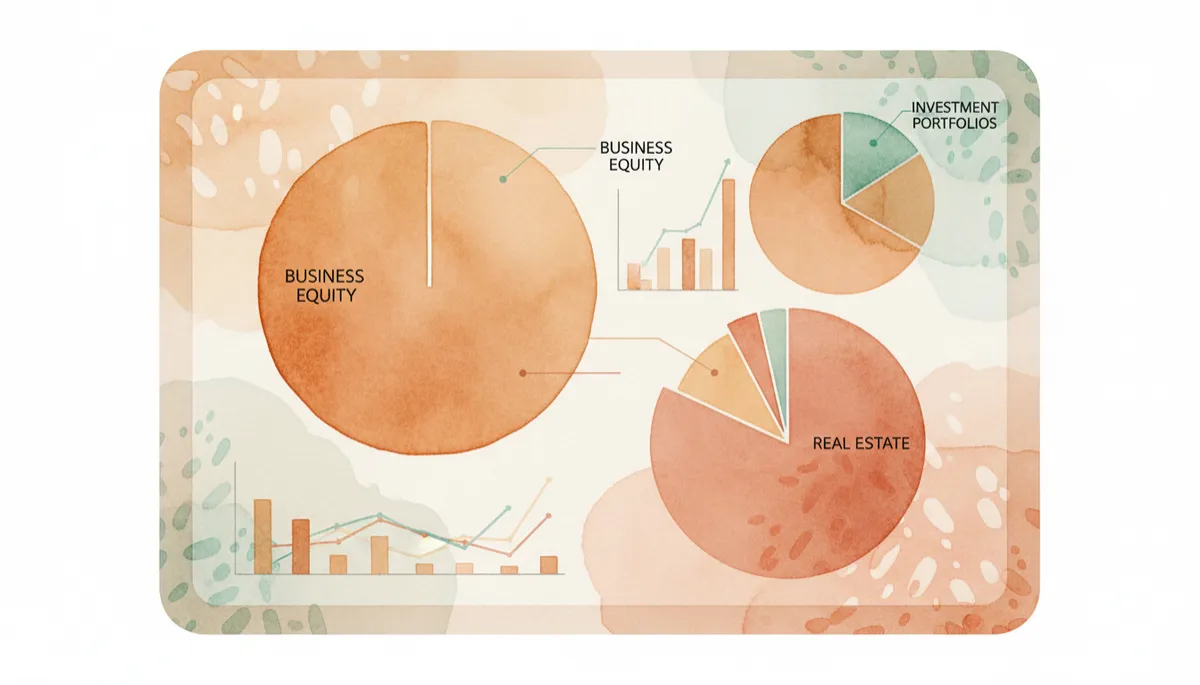
Diversifying business profits into multiple asset types stabilizes long-term personal wealth.
Step 2: Understanding Wealth Beyond Business Profits
Once you are moving money out of the business and into Personal Assets, the next step is to redefine what “wealth” means for you. Wealth is not just about how much money your company makes this year. It is about the quality, durability, and flexibility of your financial life across time.
1. Net Worth vs. Cash Flow vs. Optionality
Three key dimensions of Long-term Wealth often get overlooked when you focus only on Revenue Growth or annual profits:
Net worth: The total value of what you own minus what you owe. This is your financial scoreboard, but it is not the whole story.
Cash flow: The income your assets produce without requiring your daily effort. This is what pays your bills and funds your lifestyle when you are no longer working full throttle.
Optionality: The freedom to choose—when to sell, when to slow down, when to pivot, when to take a sabbatical, and how you support causes or people you care about.
A healthy wealth strategy intentionally grows all three. It is not just about a future sale of your business; it is about creating meaningful flexibility along the way.
2. Liquid vs. Illiquid Wealth
Business ownership is typically an illiquid asset. It may be extremely valuable on paper, but converting that value into cash can be slow, complex, and dependent on market conditions. Long-term Wealth requires a balance between illiquid assets (like your company or real estate) and liquid assets you can access relatively easily for opportunities or emergencies.
When all of your wealth is locked inside the business, you are vulnerable. A downturn, a key employee leaving, or a change in your health can suddenly threaten both your income and your net worth. By steadily building liquid Personal Assets outside the business, you create resilience and room to maneuver.
3. Time as Your Most Valuable Asset
True wealth is about more than money; it is also about time. The earlier you begin converting profits into well-structured Personal Assets, the more time can work in your favor through compounding, smart tax planning, and strategic reinvestment. Waiting until you are “ready to exit” often means you have missed years of potential growth and protection.
📌 Key Takeaway: Wealth beyond business profits is measured in net worth, cash flow, and freedom of choice—supported by a thoughtful mix of liquid and illiquid assets over time.
Step 3: Creating Long-Term Financial Leverage
Once your business is consistently generating profits and you are deliberately converting them into Personal Assets, the next frontier is long-term financial leverage. Leverage, used wisely, allows your money, time, and decisions to have a larger impact than they otherwise could.
1. Using Systems to Multiply Every Dollar
In business, you already understand leverage: systems, processes, and teams that help you produce more than you personally could alone. Long-term Wealth works the same way. A strong Wealth Management strategy uses:
Automated savings and investment plans that happen without constant decision-making
Thoughtful tax planning to keep more of what you earn working for you
Compound growth over years and decades, rather than short-term speculation
Each of these elements is a form of leverage: they allow the same dollar of profit to create more benefit for your future self than it would if it sat idle or was spent impulsively.
2. Thoughtful Use of Debt and Credit
Not all leverage is created equal. High-interest consumer debt can be destructive, while carefully structured strategic debt can accelerate Long-term Wealth. For example, you might:
Use low-cost financing to acquire cash-flowing assets that pay for themselves over time.
Reinvest profits into systems or talent that meaningfully increase your business’s long-term value, while still carving out funds for your personal wealth plan.
The key is aligning any leverage you use with clear, measurable outcomes and a realistic repayment or exit strategy. Leverage should support your freedom, not threaten it.
3. Designing Your Exit Before You Need One
One of the most powerful forms of long-term financial leverage is a well-designed exit strategy. Whether you plan to sell your company, transition it to a leadership team, or gradually step back, planning ahead gives you options and negotiating power. It also helps you align your Personal Assets and cash flow with the timing of any liquidity events.
When your personal wealth is not entirely dependent on the sale of the business, you gain the leverage to say “no” to bad offers, delay a sale until market conditions improve, or choose a transition path that honors your values rather than just your valuation.
💡 Pro Tip: Think of your future exit as one chapter in your wealth story, not the whole book. The more you build outside the business now, the more freedom you will have when that chapter arrives.
Bringing It All Together: A Practical Roadmap
Moving from Revenue Growth to true Wealth Growth does not happen overnight, but it also does not require perfection. It requires a series of clear, intentional steps that you repeat and refine over time. Here is a simple roadmap you can start using now:
Measure the gap: Compare your business metrics to your personal net worth, cash flow, and asset mix. Get honest about where you are starting.
Decide on a profit conversion formula: Choose a percentage of profits that will move from your business into Personal Assets every quarter or year—and automate it.
Clarify your asset strategy: Define how much will go to safety, growth, and freedom buckets, and which investment vehicles best fit each one.
Reduce concentration risk: Gradually lower your dependency on a single business by building diversified assets and alternative income streams.
Design for leverage: Put systems, tax strategies, and long-term planning in place so every dollar of profit does more for your future than it would on its own.
Why Guidance Matters on the Path to Long-Term Wealth
As an entrepreneur or business leader, your time and energy are already pulled in a dozen directions. Learning the entire world of Wealth Management from scratch, on top of running a company, is a heavy lift. And because every decision interacts with taxes, risk, and future plans, it is easy to feel uncertain or to delay action until “later.”
Partnering with a financial consultant who understands both business dynamics and personal wealth strategies can shorten your learning curve and help you avoid costly missteps. A good advisor will not just talk about products; they will help you design a coherent plan that connects your business goals, your family’s needs, and your vision for a bigger life.
Turning Your Business Wins into a Big Life
Your business is an incredible engine. It creates value for customers, opportunities for your team, and income for your household. But its real power shows up when you intentionally convert that success into Personal Assets and Long-term Wealth that support the life you want—on your terms.
That might mean funding more time with your family, building a legacy for future generations, supporting causes that matter to you, or simply knowing you can step back from the business one day without sacrificing your lifestyle. Whatever your version of a “big life” looks like, the path starts with moving beyond Revenue Growth alone and designing a strategy that turns today’s profits into tomorrow’s freedom.
If you are ready to start that shift, you do not have to navigate it alone. Big Life Financial works with business owners and high earners to bridge the gap between business success and personal wealth, helping you build a plan that feels clear, intentional, and aligned with the life you want to live. A conversation today can be the moment you stop relying on hope—and start building a strategy for lasting, leveraged wealth.
Sometimes, the best part is hearing how an idea comes together. Give the video a watch for a more conversational look at the subject and a few extra insights you can take with you.
