
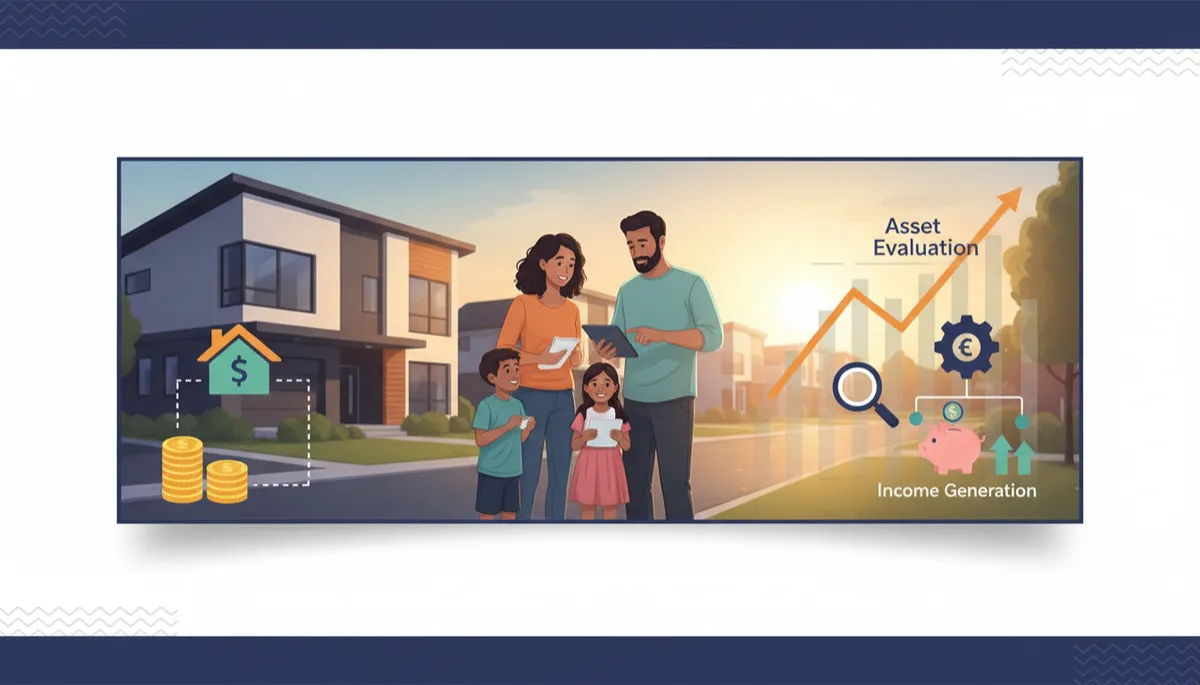
Teaching Business Concepts with Rental Properties
Business Education, Business Concepts, Asset Evaluation, Income Generation
Turning Rental Properties into a Family Classroom
Rental properties are more than just investments; they are powerful teaching tools. When families evaluate real estate together, kids and teens learn core Business Concepts like Asset Evaluation, Income Generation, risk, and return in a way no textbook can match. For business owners and agencies that care about financial literacy and legacy, using real assets as a living classroom can transform how the next generation thinks about money, opportunity, and responsibility.
Why Real Assets Are the Best Way to Teach Business Concepts
Most children learn about money in abstract terms: save, don’t overspend, get a job. But the world of business operates on very different rules. It revolves around assets, cash flow, leverage, and long-term value. When you invite your family into the process of buying and managing a rental property, you turn those abstract Business Concepts into something tangible they can see, touch, and help manage.
For agencies and business leaders, this approach also models how you build multi-generational financial strength. Instead of simply leaving money behind, you leave behind skills: how to read numbers, how to think about risk, how to evaluate an opportunity, and how to manage an asset so it consistently produces Income Generation over time. A single rental property can become a shared project that teaches everyone the language of business in a safe, guided environment.
Step One: Evaluating Rental Properties as a Family
The first major lesson is Asset Evaluation. Instead of parents disappearing to “handle the finances,” bring everyone to the table. Treat the search for a rental property like a collaborative business project. This teaches that assets are chosen intentionally, not randomly, and that every investment starts with careful evaluation of both numbers and strategy.
Framing the Conversation: What Makes a Good Asset?
Start with a simple question: “What makes this property a good business decision?” Ask each family member to share their thoughts. Some might focus on how it looks; others might think about location or rent. Use this as a chance to introduce core evaluation criteria:
Location and demand: Is it near schools, jobs, transportation, or amenities that keep it in demand over time?
Purchase price vs. rental income: Does the projected rent reasonably cover the costs with profit left over?
Condition of the property: Will it require major repairs now or soon, and how will that affect returns?
Tenant profile: Who is likely to live here, and how stable is that tenant base?
These questions turn a property tour into a live case study in Business Concepts. Kids and teens quickly see that a “pretty house” is not the same as a strong asset. They begin to understand that good Asset Evaluation is about future cash flow and risk, not just appearances.
Making the Numbers Visible and Simple
Next, bring out a simple spreadsheet or even a whiteboard. List the purchase price, expected rent, and estimated expenses. Invite family members to help fill in the blanks. You can ask:
What is the monthly rent we think we can charge?
What will the mortgage payment be each month?
How much should we budget for taxes and insurance?
What about repairs, maintenance, and property management?
When you subtract these costs from the rent, you get a basic picture of Income Generation. Even younger children can grasp the idea that if more money comes in than goes out, the property is profitable. This is the heart of how assets generate income: they produce cash flow after expenses are paid. That simple idea, seen in real time, is one of the most powerful Business Concepts you can teach.
Understanding Maintenance and Operating Costs: The Hidden Side of Asset Ownership
Many people assume that if rent is higher than the mortgage, they are making money. But businesses live and die on the details of costs. Teaching your family to understand maintenance and operating expenses turns a simple rental into a full lesson in real-world financial management and Asset Evaluation.
Breaking Down the True Cost of Owning a Rental
Sit down together and list every ongoing cost you can think of. Encourage your kids or younger relatives to brainstorm, then fill in the gaps. Typical operating costs include:
Mortgage payments (principal and interest)
Property taxes and insurance premiums
Utilities you pay as the owner (if any)
Regular maintenance: landscaping, cleaning, pest control, small repairs
Capital expenses: roof, HVAC, appliances, flooring over time
Property management or your own time if you self-manage
Then introduce the idea of setting aside a portion of the rent each month into a “maintenance reserve.” Explain that good businesses anticipate costs before they show up, and that this is part of responsible Income Generation. It’s not enough to make money today; you must protect the asset so it keeps producing tomorrow. This mindset shift—from spending whatever is left to planning for the future—is a core Business Concept that many adults never fully learn.

Walking through real operating costs teaches how profit is built, not guessed.
Turning Maintenance into a Teachable Moment
Every time something breaks or needs attention, you have a fresh opportunity to reinforce these lessons. Instead of quietly paying the bill, bring the situation to the family “boardroom.” Share what happened, what the repair will cost, and how it affects this month’s cash flow. Ask questions like:
Did we plan for this type of expense in our maintenance reserve?
If not, what can we do differently next time?
Is there a smarter long-term fix that reduces future costs?
This is where Business Concepts like risk management, reserves, and long-term planning come alive. Your family sees that real assets require stewardship, not just ownership. They learn that a profitable rental is not an accident; it is the result of disciplined planning around maintenance and operating costs.
Learning How Assets Actually Generate Income
Once your family understands how to evaluate a property and account for costs, it’s time to zoom out and look at the bigger picture of Income Generation. Rental properties teach that assets can work for you, even when you are not physically present. This is a transformative idea for kids who may assume that income only comes from a job or hourly work.
Cash Flow: The Monthly Report Card
Create a simple monthly “income statement” for the property. It doesn’t have to be perfect or complex. Show:
Total rent received
Total operating expenses paid this month
Money added to reserves for future maintenance or vacancies
Net cash flow (what’s left after everything is covered)
Ask your family to interpret the results. Did the property generate positive income this month? If not, why? Was it a one-time issue or a structural problem? This is how you teach Business Concepts like profitability, cash flow management, and the difference between revenue and profit. Over time, family members begin to anticipate patterns: higher utility bills in winter, occasional vacancies, or bigger repairs every few years. They learn to think ahead like owners, not just observers.
Appreciation and Equity: The Invisible Income Streams
Rental properties also teach that Income Generation is not only about monthly cash flow. Over time, as the mortgage is paid down and the property (ideally) increases in value, the family’s equity grows. This is another critical Business Concept: assets can quietly build wealth in the background, even when the monthly profit looks modest.
Periodically, review the loan balance and estimated property value together. Show how much equity has been created since purchase. Explain that each mortgage payment is partly an expense (interest) and partly a transfer of value from the bank to your family (principal). Over the years, this “forced savings” can become a powerful wealth engine. When kids see this, they begin to understand why businesses and investors focus on acquiring assets instead of just earning higher salaries.
Systems and Roles: Running the Asset Like a Family Business
To deepen the learning, assign age-appropriate roles connected to the property. One child might help track rent payments in a simple ledger. Another might be responsible for noting when inspections or maintenance are due. Older teens might help compare insurance quotes or research local rental market trends. This turns the property into a small, shared enterprise where everyone contributes to Asset Evaluation and ongoing Income Generation.
For business owners and agencies, this is also a blueprint for grooming future leaders. You are not simply telling the next generation that business is important; you are giving them a structured, real-world lab where they can practice decision-making, communication, and financial thinking in a controlled, supportive environment.
How Agencies and Business Leaders Can Implement This Model
If you run a business or agency, you can extend this concept beyond your own household. Consider how you might use real assets—whether rental properties, business equipment, or intellectual property—as teaching tools for your team and their families. Hosting workshops where employees bring their kids to learn about basic Business Concepts through simple Asset Evaluation exercises can deepen loyalty and improve financial literacy across your organization.
Imagine a quarterly “family finance lab” where you walk through an example rental property, discuss maintenance and operating costs, and show how the asset generates income over time. You model transparency, long-term thinking, and ownership. This not only supports your people; it reinforces the culture of stewardship and intelligent risk-taking that high-performing organizations rely on.
From Concept to Legacy: Building a Big Life with Real Assets
At the heart of all of this is a simple truth: real assets are one of the most effective ways to teach real business. When your family learns how to evaluate rental properties, understand maintenance and operating costs, and see firsthand how assets generate income, they gain a practical education that compounds for the rest of their lives. They stop thinking only in terms of jobs and start thinking in terms of ownership, systems, and long-term strategy.
For business owners and agencies, this is exactly the kind of mindset you want to cultivate—both at home and inside your organization. It creates people who understand numbers, who respect risk, and who look for smart ways to turn resources into ongoing cash flow. It’s the foundation for multi-generational wealth and meaningful impact.
Ready to Turn Business Concepts into a Family Advantage? Big Life Financial Can Help
If you’re serious about using real assets to teach Business Concepts, elevate your Asset Evaluation skills, and build reliable Income Generation for your family or your agency’s leadership team, you don’t have to figure it out alone. The right guidance can accelerate your learning curve and help you avoid costly mistakes with rental properties and other investments.
Big Life Financial specializes in helping entrepreneurs, professionals, and families design wealth strategies that go beyond basic savings and traditional retirement plans. They focus on turning your income into productive assets—like well-structured rental portfolios—that can support your lifestyle, your business, and your legacy for decades to come. Their team understands how to translate complex financial tools into simple, actionable steps that you can share with your children, partners, and key team members.
Whether you’re just considering your first rental property or you already own multiple assets and want a more intentional, family-centered strategy, Big Life Financial can help you:
Clarify your long-term wealth and legacy goals for both business and family.
Evaluate potential assets with a clear framework for risk, return, and cash flow.
Design systems for tracking maintenance, operating costs, and performance that your family can understand and participate in.
Create an education plan so your kids and key team members learn alongside you, not after you.
You’re already investing time and energy into your business and your family. Why not align those efforts with a strategy that uses real assets as a living classroom and a powerful engine for Income Generation? Partner with experts who understand both the numbers and the human side of building a legacy.
To explore how rental properties and other assets can fit into your bigger wealth strategy—and how to turn them into a hands-on education for the next generation—reach out to Big Life Financial today. Discover how to build a bigger life, not just a bigger bank account, by teaching Business Concepts through real assets that support your family and business for years to come.
There's always more to learn. Watch the full video to hear the complete conversation and discover additional insights.
