
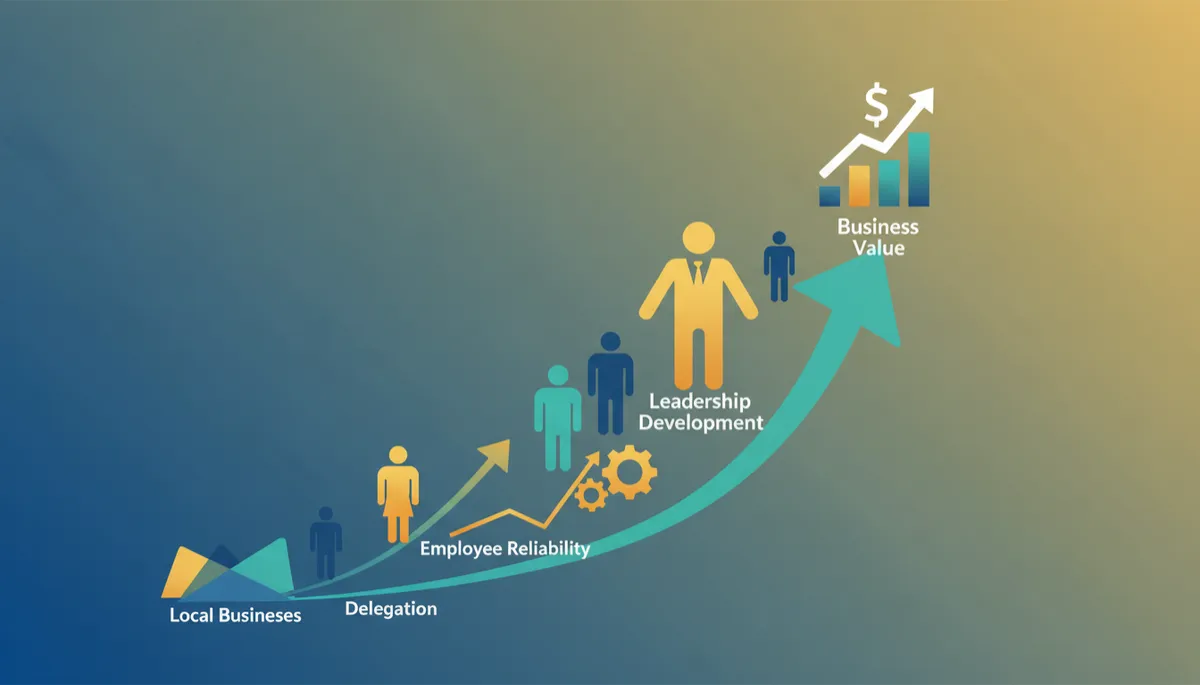
Scale Business Value by Strengthening Your Team
Leadership Development, Team Strengthening, Business Value
How to Scale Business Value by Strengthening Your Team
For most business owners, the biggest asset isn’t the building, the equipment, or even the brand name—it’s the people who show up every day to serve your customers. When you treat your team as a strategic investment instead of a cost, you unlock something powerful: a direct path to higher profits and a higher company valuation. This is the core of a modern human capital growth strategy, and it’s where Leadership Development, smart delegation, and employee reliability all come together to scale Business Value.
Why Your Team Is the Engine of Business Value
When an investor, banker, or potential buyer looks at your company, they are asking one simple question: How predictable and transferable are the profits? A business that depends entirely on the owner’s personal effort is risky. If you step away, results fall apart. But a business powered by a strong, reliable team looks very different. Revenue is more stable, operations are consistent, and growth doesn’t depend on you working nights and weekends.
This is why strengthening your team is a direct lever for increasing company valuation. Buyers will pay more—often a much higher multiple of earnings—for a business that can run smoothly without the owner in every decision. A thoughtful human capital growth strategy turns your people into a system that consistently produces results, even when you’re not in the room. That’s exactly where Leadership Development, effective delegation, and employee reliability come in.
Leadership Development: The Starting Point of Human Capital Growth Strategy
Every strong team starts with strong leadership. But Leadership Development is not just about the owner becoming more confident or charismatic. It’s about building a culture in which responsibility, initiative, and problem-solving are shared throughout the organization. For local businesses especially, this is what separates “owner-dependent” shops from scalable companies with real Business Value.
Shifting from “Hero Owner” to “Builder of Leaders”
Many local business owners unconsciously play the role of hero: they fix every crisis, approve every decision, and stay late to “save the day.” While this might feel responsible in the short term, it actually limits growth and drags down company valuation. A buyer looking at that situation sees one thing: risk. If you are the hero, what happens when you’re gone?
Leadership Development means redefining your role from hero to architect. Instead of being the one who solves every problem, you become the one who builds systems and people who can solve problems without you. This is a subtle but powerful shift. It turns your everyday decisions into training opportunities for your team and lays the foundation for a business that can truly scale.
Practical Leadership Development Moves for Local Business Owners
Hold short weekly leadership huddles. Bring your key people together for 20–30 minutes. Review priorities, ask for input, and let others present solutions instead of you dictating every step. Over time, this builds decision-making muscles in your team and increases their ownership over results.
Share the “why,” not just the “what.” When you give direction, explain the reasoning behind it. This is a simple form of Leadership Development that helps employees understand your thinking so they can make similar decisions when you’re not there.
Create clear roles and lanes. Ambiguity kills initiative. When people know what they own—and what success looks like in that role—they are more likely to step up, take responsibility, and deliver reliable results.
💡 Pro Tip: Treat every conversation with a team member as a chance to build a leader, not just give instructions. Ask, “What do you think we should do?” before offering your answer.
Delegation: The Bridge Between Leadership and Scalable Business Value
Leadership without delegation is just more work for you. Delegation is how you turn Leadership Development into tangible Business Value. When you delegate effectively, you free your time for high-value activities—strategic planning, key relationships, new revenue opportunities—while also giving your team room to grow. Done poorly, delegation feels like dumping tasks. Done well, it becomes a powerful tool for human capital growth and higher company valuation.
Why Many Owners Struggle to Delegate (and How It Hurts Valuation)
Common objections to delegation sound like this: “It’s faster if I do it myself,” “No one cares as much as I do,” or “My team isn’t ready.” These beliefs keep you trapped in the day-to-day and signal to outside buyers that the business can’t function at a high level without you. That reality pushes your company valuation down, even if your revenue looks strong on paper.
The truth is, delegation is a skill—one that can be learned and improved. When you master it, you create capacity in your own schedule and build competence in your team. That combination is exactly what makes your business more attractive to lenders, partners, and potential acquirers.
A Simple Delegation Framework for Local Businesses
Clarify the outcome. Instead of delegating a task list, delegate a result. For example, “Have next month’s schedule completed and posted by the 20th, with at least two people trained on every critical shift.” Clear outcomes reduce confusion and build reliability.
Agree on boundaries. Let your team know what decisions they can make on their own and when they should check with you. This reduces bottlenecks and prevents costly surprises while still giving them room to lead.
Provide tools and training. Delegation without support sets people up to fail. Make sure they have the information, systems, and authority needed to deliver the outcome you’re expecting. This is where Leadership Development and delegation overlap in your human capital growth strategy.
Schedule check-ins, not check-ups. Instead of hovering, agree on specific times to review progress. This keeps projects on track while signaling trust. Over time, you can reduce the frequency of these check-ins as your team proves their reliability.
💡 Pro Tip: Start by delegating repeatable, process-driven work—like scheduling, inventory checks, or basic customer follow-up—before handing off critical client relationships or financial decisions.
Employee Reliability: The Hidden Multiplier of Company Valuation
You can have a great brand and strong demand, but if your employees are inconsistent—late to work, slow to respond, or careless with quality—your Business Value takes a hit. Reliability is what turns individual performance into dependable, repeatable results. To an outside buyer, reliable employees look like a system that works; unreliable employees look like risk. And risk always reduces company valuation.

Style, -toned retail or service business with a reliable frontline team greeting customers,...
Reliable teams create consistent customer experiences, which buyers reward with higher valuations.
What Reliability Looks Like in a Local Business
Customers receive the same level of service whether you are in the building or not.
Work gets done on time, to standard, without constant follow-up or reminders.
Employees show up consistently, follow procedures, and take ownership when mistakes happen.
When reliability is high, your business becomes predictable. Predictability is exactly what lenders and buyers are looking for, because it makes future cash flow easier to forecast. That predictability is a key driver of higher company valuation, especially when combined with strong Leadership Development and thoughtful delegation.
Building Reliability Through Systems and Culture
Document your core processes. From opening and closing routines to customer intake and follow-up, write down the steps. Clear, simple checklists are one of the fastest ways to increase reliability without adding more management overhead.
Train to the standard, not the person. Instead of saying “Do it like Sarah does,” show everyone the documented standard and train to that. This turns individual excellence into a repeatable system and reduces your dependence on any one “star” employee.
Recognize reliability publicly. When team members consistently show up on time, follow procedures, or catch issues early, call it out and celebrate it. This reinforces the behavior you want and weaves reliability into your culture.
💡 Pro Tip: Track a few simple reliability metrics—on-time starts, completed checklists, customer callbacks—to make reliability visible and measurable for your team.
How Strong Teams Translate into Higher Company Valuation
It’s one thing to say “people are our greatest asset.” It’s another to understand how that asset actually shows up in your company valuation. Whether you plan to sell your business, bring on a partner, seek financing, or simply build long-term wealth, a strong team can significantly increase what your company is worth on paper and in the marketplace.
The Valuation Impact of Leadership, Delegation, and Reliability
Reduced owner dependence. When your leadership team can run day-to-day operations, your business becomes more transferable. Buyers will often pay a higher multiple for companies that don’t require the owner to be present for success. This is a direct result of Leadership Development and effective delegation.
More stable cash flow. Reliable employees and strong systems reduce mistakes, rework, and lost customers. This leads to more consistent revenue and healthier profit margins—both major drivers of Business Value in any valuation model.
Scalability. With a capable team and clear delegation, you can open additional locations, expand services, or take on larger contracts without burning out. The ability to scale without chaos significantly increases how outside parties perceive your company’s worth.
In other words, your human capital growth strategy is not a “soft” initiative. It’s a concrete, financial strategy for increasing what your business is worth—today and in the future. Leadership Development, team strengthening, and employee reliability are all levers that directly influence valuation, especially for local businesses where owner dependence is often the biggest drag on value.
Where Big Life Financial Fits into Your Human Capital Growth Strategy
Strengthening your team is a powerful step—but it’s only part of the picture. To fully capture the Business Value you’re creating, you also need a financial strategy that recognizes and leverages that value. This is where Big Life Financial can be a game changer for local business owners who are serious about Leadership Development, delegation, and building reliable teams.
Big Life Financial specializes in helping business owners turn their hard work—and their team’s hard work—into lasting wealth. That means looking beyond just revenue and profit to understand how your systems, people, and processes contribute to long-term company valuation. When your human capital is strong, Big Life Financial helps you:
Clarify your business’s true value. Many owners underestimate what their company is worth, especially after investing in team strengthening and Leadership Development. Big Life Financial helps you see the full picture so you can make smarter decisions about growth, financing, or exit planning.
Design cash flow strategies around your team. As your employees become more reliable and your operations more efficient, your cash flow stabilizes. Big Life Financial can help you redirect that stability into tax-efficient strategies, reserves, and investments that support both the business and your personal financial goals.
Prepare for financing or a future sale. A strong team and clear delegation structure make your business more attractive to banks and buyers. Big Life Financial helps you document and communicate that strength so you can secure better terms, higher valuations, and more favorable exit options when the time is right.
📌 Key Takeaway: Investing in your people is one of the best ways to increase Business Value—but you also need a financial partner like Big Life Financial to make sure that value translates into long-term wealth for you and your family.
A Step-by-Step Game Plan to Strengthen Your Team and Scale Business Value
Step 1: Assess Your Current Leadership and Team Structure
Start with an honest look at where you are today. How much of the business depends on you personally? Which decisions only you can make? Who are your emerging leaders? Where are the reliability gaps? You can even ask yourself, “If I had to step away for 30 days, what would break first?” The answers will highlight your highest-priority areas for Leadership Development and delegation.
Step 2: Identify and Develop Key Leaders
Look for team members who show initiative, communicate well, and care about the customer experience. They don’t need to be perfect; they just need potential. Begin involving them in planning conversations, give them small leadership responsibilities, and provide feedback and encouragement. This is Leadership Development in action—and it’s the foundation of your long-term human capital growth strategy.
Step 3: Systematize and Delegate Core Processes
Choose a few essential areas—such as scheduling, inventory, or customer follow-up—and document the process step by step. Then delegate ownership of each process to a specific person, along with clear outcomes and boundaries. Support them with training and regular check-ins. Over time, you can expand this approach to more complex areas of the business, steadily increasing your capacity and your team’s reliability.
Step 4: Build a Culture of Accountability and Reliability
Reliability doesn’t happen by accident. It grows in a culture where expectations are clear, follow-through is recognized, and mistakes are treated as learning opportunities rather than blame games. Use simple scorecards or dashboards so your team can see how they’re doing. Celebrate wins publicly and handle misses privately, with coaching and support. As reliability rises, your company valuation quietly rises with it.
Step 5: Align Financial Strategy with Your Stronger Team
As your team strengthens and your operations become more predictable, it’s time to align your financial strategy with this new level of performance. This is an ideal moment to connect with Big Life Financial. Together, you can review your cash flow, tax strategy, growth plans, and long-term exit options in light of your stronger human capital. The goal is simple: make sure your improved Leadership Development, delegation, and employee reliability show up as real, measurable Business Value in your financial life.
💡 Pro Tip: Put a calendar reminder every quarter to review two things: your team’s strength and your company valuation strategy. When those stay in sync, you build a business that is both easier to run and worth more every year.
Bringing It All Together: Your People Are the Path to a More Valuable Business
For local businesses, growth isn’t just about more customers or bigger advertising budgets. It’s about building a team that can deliver consistent, high-quality results without you having to carry the entire weight on your shoulders. When you focus on Leadership Development, practice effective delegation, and intentionally build employee reliability, you’re not just making your life easier—you’re increasing the true Business Value of your company.
Strong leadership turns employees into owners of their roles. Thoughtful delegation frees you to focus on strategy and growth. Reliable people and systems create predictable cash flow and consistent customer experiences. Together, these elements form a powerful human capital growth strategy that directly boosts company valuation, whether you plan to sell one day or simply want a business that supports a bigger life for you and your family.
You don’t have to do this alone. As you strengthen your team, partner with Big Life Financial to make sure that the Business Value you’re building on the inside of your company is fully recognized in your financial plan. When your people strategy and your money strategy work together, you create a business that is not only more profitable and less stressful to run, but also significantly more valuable in the eyes of banks, buyers, and—most importantly—you.
If you’re ready to turn a stronger team into a stronger balance sheet, now is the time to take action. Invest in Leadership Development, commit to better delegation, raise the bar on employee reliability, and connect with Big Life Financial to align your human capital growth strategy with a clear, intentional plan to scale your Business Value. Your future self—and your future company valuation—will thank you.
Sometimes, reading about an idea is just the beginning. If you want to hear the conversation behind it and pick up on some of the details that don’t always make it onto the page, spend a few minutes with the full discussion.
