
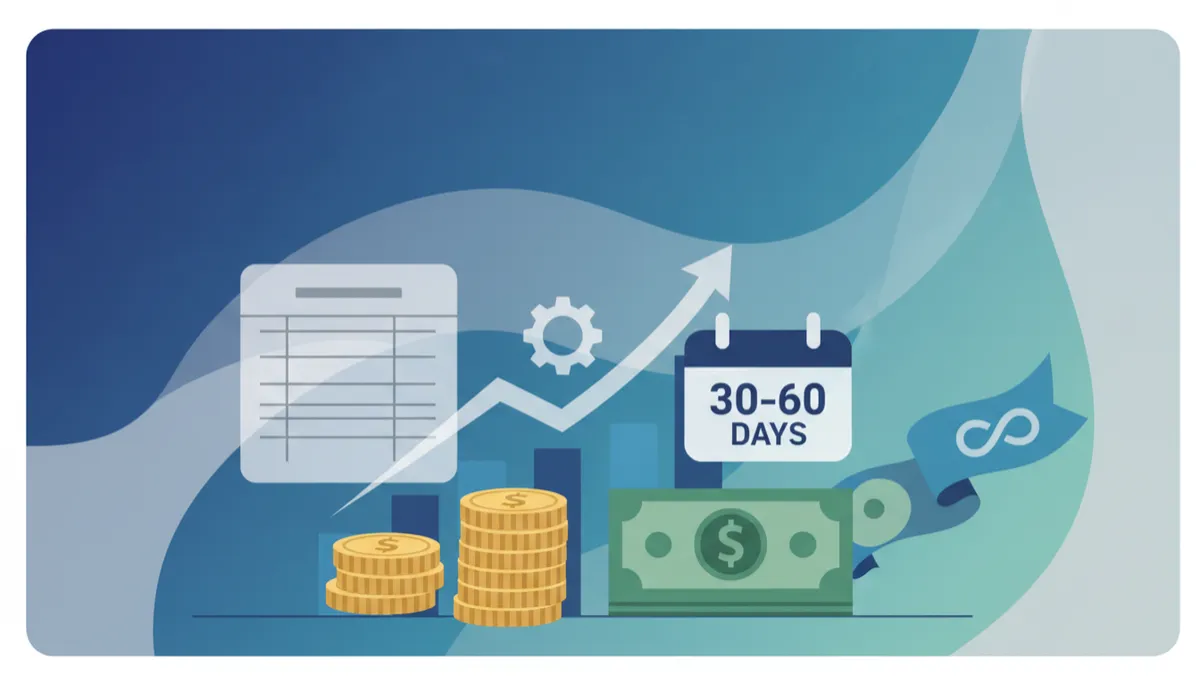
Optimal Cash Reserves: The 30–60 Day Rule
Cash Management, Business Finances, Operating Expenses
How Much Cash Should You Keep in Your Business? The 30–60 Day Rule Explained
For many local business owners, “How much cash should we keep in the bank?” is a constant, nagging question. Keep too little, and one slow month or broken piece of equipment can send you scrambling. Keep too much, and you starve your growth, marketing, and owner pay. The 30–60 day cash rule gives you a simple, practical way to manage your cash, protect your business, and make confident financial decisions.
Why Cash Management Matters More Than Profit on Paper
You can be profitable on paper and still run out of money. That’s the harsh truth many local businesses discover when payroll is due, a big customer pays late, or a surprise tax bill lands in the mail. Cash Management is the discipline of making sure there is enough cash in your business bank account to cover what’s coming next—this week, this month, and this quarter—without leaving so much idle cash that your growth stalls.
The 30–60 day cash rule is a simple framework inside broader Business Finances. It says your business should usually keep cash equal to 30–60 days of Operating Expenses on hand. Not 5 days. Not 6 months. Roughly one to two months of what it actually costs to keep the doors open and the lights on. Before we dig into why that range works so well, we need to be crystal clear on what “operating expenses” really are.
What Do “Operating Expenses” Actually Include?
Many owners hear “operating expenses” and think only of rent and payroll. In reality, it’s a broader, more practical number. Operating expenses are the recurring costs required to run your business in a normal month, excluding loan principal payments and large one-off purchases. Think of it as the monthly cost of simply existing and operating, even if you didn’t sell a thing tomorrow. Typical operating expenses for a local business include:
Payroll and wages: salaries, hourly staff, payroll taxes, and regular contractor payments tied to operations (for example, a bookkeeper or cleaning crew on retainer).
Rent or mortgage for your business location: including common area maintenance fees and property taxes if they’re part of your monthly bill.
Utilities and basic services: electricity, gas, water, trash, internet, phone lines, and point-of-sale or software subscriptions needed to operate day to day.
Insurance: general liability, workers’ compensation, property, professional liability, and health insurance contributions for staff, if applicable.
Regular marketing and advertising: ongoing ad campaigns, local sponsorships, SEO services, or social media management you consistently pay for each month.
Supplies and materials: inventory replenishment, office supplies, packaging, cleaning supplies, and other recurring consumables you need to serve customers.
Professional services: monthly bookkeeping, payroll services, and other ongoing support agreements (not one-time consulting projects).
What usually does not go into operating expenses for this calculation are things like large equipment purchases, down payments on vehicles, or big one-time projects. Those are capital expenses. For Cash Management, we’re focusing on the predictable, repeatable costs that hit your bank account every single month—because those are the bills that can sink you if you can’t pay them.
💡 Pro Tip: Pull the last 6–12 months of your profit and loss statement and average your monthly operating expenses. That average is the foundation of your 30–60 day cash target.
Why 30–60 Days of Operating Expenses Is the Ideal Cash Range
So why not keep a full year of cash in the bank? Or just enough to get you through the week? The 30–60 day rule is a practical middle ground that balances stability and growth. It’s long enough to ride out most short-term bumps, and lean enough that your money still works for you in marketing, hiring, or equipment upgrades rather than sitting idle in a low-interest account.
Here’s why the 30–60 day range works so well for most local businesses:
It covers typical payment delays. If a big customer pays two weeks late or a credit card batch gets held, 30–60 days of cash gives you room to breathe without missing payroll or rent.
It handles minor emergencies. A broken air conditioner, a key staff member out sick, or a temporary dip in foot traffic can be absorbed without panic, calls to the bank, or high-interest credit cards.
It keeps you accountable. With a clear cash target, you know exactly when you can safely invest in new marketing, staff, or equipment—after your 30–60 day cushion is funded. That structure supports smarter Business Finances decisions.
It avoids hoarding. More than 60 days in the operating account often signals missed opportunities. That extra cash could be paying down high-interest debt, funding advertising campaigns, or being moved into a higher-yield reserve or investment.
Think of 30–60 days as your “comfort zone” in Cash Management. Below 30 days, you start to feel exposed. Above 60 days, you’re probably leaving growth on the table. Inside that range, you can focus on running and growing the business rather than constantly worrying about the bank balance.
The Risks of Holding Too Little Cash
Operating with less than 30 days of cash is like driving with the fuel light on all the time. You might make it, but every hill or detour becomes stressful. The risks of too little cash are very real:
Missed payroll or late payments. Even one missed payroll damages trust with your team. Late rent or vendor payments can lead to penalties, strained relationships, and even service interruptions that hurt revenue.
Reliance on expensive credit. When your cash runs thin, you’re forced to lean on high-interest credit cards, overdraft protection, or short-term loans. That increases your cost of doing business and eats into profit margins long after the crisis has passed.
Constant stress and reactive decisions. Owners who are always worried about tomorrow’s bills tend to make short-sighted choices—cutting marketing, delaying needed hires, or accepting bad-fit clients just for quick cash.
No room for opportunity. When a great opportunity appears—a discounted inventory buy, a prime storefront, or a chance to sponsor a major local event—you can’t move because every dollar is already spoken for.
Over time, running with too little cash wears you down. It increases risk of closure, damages your reputation with vendors and staff, and makes it harder to plan long term. This is exactly what smart Cash Management is designed to prevent.
The Risks of Holding Too Much Cash
On the surface, having a big bank balance feels safe. But for many local businesses, carrying more than 60 days of operating expenses in the main checking account creates a different set of problems. Cash that just sits is cash that isn’t helping your business grow or your wealth build. The main risks of holding too much cash include:
Lost growth opportunities. Excess cash could be funding advertising that brings in new customers, upgrading equipment for higher efficiency, or opening a second location. When money sits idle, your competitors may be using theirs to gain ground on you.
Inflation erosion. Over time, inflation quietly eats away at the purchasing power of cash. Earning virtually nothing in a checking account while costs rise each year is a silent but real loss.
False sense of security. A large balance can hide weak pricing, poor margins, or sloppy expense control. Owners may delay tough decisions because “there’s money in the bank,” only to discover deeper problems later.
Lack of intentional planning. When you don’t define a clear cash target, you’re less likely to deliberately move surplus funds into reserves, investments, or tax planning strategies that build long-term wealth.
The goal isn’t to strip your accounts bare. It’s to right-size your cash for healthy Business Finances: enough to be resilient, not so much that your money goes lazy. The 30–60 day rule gives you that balance and tells you when it’s time to put surplus dollars to better use.

Right-sizing cash reserves frees up money for marketing, hiring, and growth.
How to Calculate Your 30–60 Day Cash Number
Now let’s turn this from theory into a simple, actionable Cash Management formula. You only need two numbers: your average monthly operating expenses and your chosen number of days (between 30 and 60). Here’s a straightforward way to do it:
Calculate your average monthly operating expenses. Add up your total operating expenses for the last 6–12 months (from your profit and loss statements) and divide by the number of months. This smooths out one-off spikes and gives you a realistic monthly baseline.
Convert that monthly number into a daily cost. Divide your average monthly operating expenses by 30. For Cash Management purposes, we treat a month as 30 days to keep the math simple.
Multiply by your target days (30–60). Decide whether your situation calls for 30, 45, or 60 days of cash (we’ll cover how to choose in a moment). Multiply your daily cost by that number of days. The result is your ideal cash reserve for operating expenses.
Here’s an example to make it concrete:
Your average monthly operating expenses are $60,000.
Daily operating cost = $60,000 ÷ 30 = $2,000 per day.
For 45 days of cash: $2,000 × 45 = $90,000.
In this case, you’d aim to keep about $90,000 in your operating account as your 45-day cash reserve. When your balance drops well below that, you know it’s time to tighten up collections, delay non-essential spending, or increase sales efforts. When it consistently sits well above that, you know you have surplus cash to allocate intentionally to debt payoff, marketing, or long-term reserves.
💡 Pro Tip: Many owners like to set a floor and a ceiling. For example, a floor of 30 days and a ceiling of 60 days. Below the floor, focus on rebuilding cash. Above the ceiling, move money to growth or reserves.
When to Adjust Your Cash Target: Growth, Seasonality, and Uncertainty
The 30–60 day rule is a guideline, not a rigid law. Smart Cash Management means adjusting your target when your business environment changes. Three major factors should influence whether you lean closer to 30 days or 60 days: growth, seasonality, and uncertainty.
1. Fast Growth
Rapid growth is exciting—and cash hungry. When you’re hiring ahead of demand, increasing inventory, or launching new locations, expenses often hit before revenue catches up. In high growth phases, it’s wise to lean toward the 45–60 day end of the range. That extra cushion gives you room to:
Onboard new staff without stressing every payroll cycle.
Stock up on inventory for increased demand or new product lines.
Absorb delays if new marketing campaigns or locations take longer than expected to pay off.
2. Seasonality
Many local businesses—landscaping, retail, tourism, tax services—have busy seasons and slow seasons. Seasonality should absolutely influence your cash target. A practical approach is:
Before slow season: Build up to the higher end of the range (45–60 days) so you can comfortably cover expenses when revenue dips.
During peak season: You may temporarily operate closer to 30 days of cash as revenue is flowing strongly, then intentionally move surplus into reserves or growth projects.
Mapping your cash needs to your seasonal calendar is one of the most powerful Business Finances moves you can make. It turns those “how will we survive January?” worries into a planned, funded strategy.
3. Economic and Industry Uncertainty
When the broader economy or your specific industry feels shaky—rising interest rates, new regulations, or major competitors entering your market—it can be wise to increase your cash buffer. In uncertain times, aiming for 60 days or slightly more may be appropriate, at least temporarily. The extra cushion buys you time to adapt your offerings, adjust pricing, or pivot your marketing without being forced into desperate decisions.
💡 Pro Tip: Revisit your cash target at least quarterly. As growth, seasonality, and uncertainty shift, your ideal number will, too. Cash Management is not “set it and forget it”—it’s a living part of your operating rhythm.
Why the 30–60 Day Approach Works in the Real World
The beauty of the 30–60 day rule is its simplicity. You don’t need a finance degree or a complex spreadsheet model. You just need to know your operating expenses and your appetite for risk. This approach works for local businesses because it:
Aligns with how cash really flows. Most local businesses pay bills monthly, have weekly or biweekly payroll, and collect customer payments within 30–45 days. A 30–60 day buffer fits naturally into that cycle.
Gives you a clear decision-making tool. Instead of guessing whether you can afford that new hire or marketing campaign, you check one number: “Are we still within our 30–60 day cash range after this expense?”
Supports both stability and ambition. You’re no longer forced to choose between “playing it safe” and “going for growth.” You protect a defined base of stability, then confidently invest what’s above that line.
Works across industries and sizes. Whether you run a coffee shop, dental practice, construction company, or marketing agency, the principle is the same: set a cash target based on your Operating Expenses and manage to it.
In other words, this isn’t just theory. It’s a practical Cash Management rule that can be implemented quickly, monitored easily, and adapted as your business evolves. That’s why so many financial coaches and firms, including organizations like Big Life Financial, favor simple, rules-based frameworks that owners can actually stick with.
Putting Your Cash to Work: What to Do When You’re Above 60 Days
Once you’ve funded your 30–60 day cash reserve, the next question is: what should you do with extra cash that piles up above that level? This is where intentional Business Finances strategy comes in. Surplus cash is a sign of health—and an opportunity. Some smart uses include:
Paying down high-interest debt. Reducing expensive credit card or loan balances improves your monthly cash flow and lowers risk, often with a guaranteed return equal to the interest rate you’re no longer paying.
Investing in marketing and advertising. Allocating surplus to proven marketing channels—like local SEO, online ads, or community sponsorships—can expand your customer base and increase revenue. This is also where partnering with a firm like Big Life Financial can help you evaluate the return on different growth investments.
Building separate reserves. Beyond operating cash, you might create dedicated accounts for taxes, equipment replacement, or owner wealth-building. This keeps your operating account lean while still protecting against bigger, less frequent expenses.
Strategic hiring. Surplus cash can fund key hires—like a manager, salesperson, or marketing coordinator—who free you up from day-to-day tasks and drive long-term growth.
The key is to treat every dollar above your 60-day ceiling as intentional fuel for your next stage of growth, not just “extra” money that slowly gets absorbed into random spending. This is where a clear Cash Management plan transforms your bank account from a source of stress into a strategic tool.
How This Cash Strategy Supports Your Marketing and SEO Efforts
You might be wondering how a blog about cash reserves connects to SEO and attracting more local customers. The answer is twofold. First, from a content perspective, topics like Cash Management, Business Finances, and Operating Expenses are highly relevant search terms for business owners looking for guidance. Publishing clear, educational content around these keywords helps your firm or practice show up when local owners search for help online.
Second, from a practical standpoint, having a solid cash reserve makes it easier to consistently invest in marketing and SEO. Instead of cutting advertising every time you hit a slow month, your 30–60 day cushion lets you maintain or even increase your marketing spend when competitors are pulling back. That consistency compounds your visibility and reputation over time. Firms like Big Life Financial often emphasize this connection: strong internal finances support stronger external growth strategies.
📌 Key Takeaway: Financial stability and smart Cash Management are not separate from growth—they are the foundation that allows you to market confidently, invest in SEO, and outlast competitors in your local market.
Where Big Life Financial Fits Into Your Cash Management Plan
You don’t have to figure all of this out alone. Many local businesses partner with advisory firms like Big Life Financial to design and fine-tune their cash strategy. A good advisor can help you:
Clarify your true Operating Expenses and identify hidden costs that may be quietly draining your cash.
Choose the right cash reserve target for your specific industry, growth stage, and risk tolerance—whether that’s closer to 30 days or 60 days.
Build simple systems to monitor your cash position weekly or monthly, so you always know where you stand without spending hours in spreadsheets.
Decide how to deploy surplus cash into marketing, debt reduction, or long-term wealth strategies that align with your vision for the business and your personal life.
If you’re ready to advertise your services more confidently, expand your local presence, or simply sleep better at night knowing your cash is under control, working with a team like Big Life Financial can accelerate that process. They specialize in helping owners turn confusing Business Finances into clear, actionable plans that support both stability and growth.
Your Next Steps: Put the 30–60 Day Rule to Work
You don’t need to overhaul your entire financial system to start benefiting from this approach. In fact, you can take the first steps this week. Here’s a simple action plan:
Pull your numbers. Download the last 6–12 months of profit and loss statements. Calculate your average monthly Operating Expenses.
Set your target. Decide whether 30, 45, or 60 days of cash is right for your current situation, considering your growth plans, seasonality, and the level of uncertainty you feel in your market.
Compare to your current balance. Look at the cash in your main operating account. Is it below your target, within the 30–60 day range, or significantly above it?
Make a simple plan. If you’re below target, outline how you’ll rebuild cash—tighten expenses, speed up collections, or increase profitable sales. If you’re above target, decide where to intentionally move surplus funds: debt reduction, marketing, or reserves.
Review regularly. Put a reminder on your calendar to review your cash position monthly or quarterly. Adjust your target as your business grows or your environment changes.
Over time, this simple routine becomes part of how you run the business—just like checking sales numbers or scheduling staff. It turns Cash Management from a source of anxiety into a confident habit that supports every other decision you make as an owner.
Final Thoughts: Cash Is a Tool, Not a Scoreboard
It’s easy to treat your bank balance like a scoreboard—higher means you’re “winning,” lower means you’re “losing.” But in reality, cash is a tool. The goal isn’t to hoard as much of it as possible or to run on fumes. The goal is to keep the right amount of cash, in the right place, at the right time so your business can operate smoothly, seize opportunities, and support the life you’re building.
The 30–60 day rule gives you a practical, proven way to do that. By anchoring your target to your true Operating Expenses, adjusting for growth, seasonality, and uncertainty, and treating surplus cash as fuel for marketing, hiring, and long-term wealth, you put yourself in a much stronger position than most local businesses. And if you’d like expert help turning these ideas into a tailored plan, a firm like Big Life Financial can help you translate simple rules into a strategy that fits your unique situation.
Start today: know your number, set your range, and let smart Cash Management support every other part of your Business Finances—from Operating Expenses and payroll to marketing, SEO, and long-term growth.
The best insights often come from hearing the full conversation. If you'd like to explore the ideas from a broader perspective, be sure to watch the complete video discussion.
