
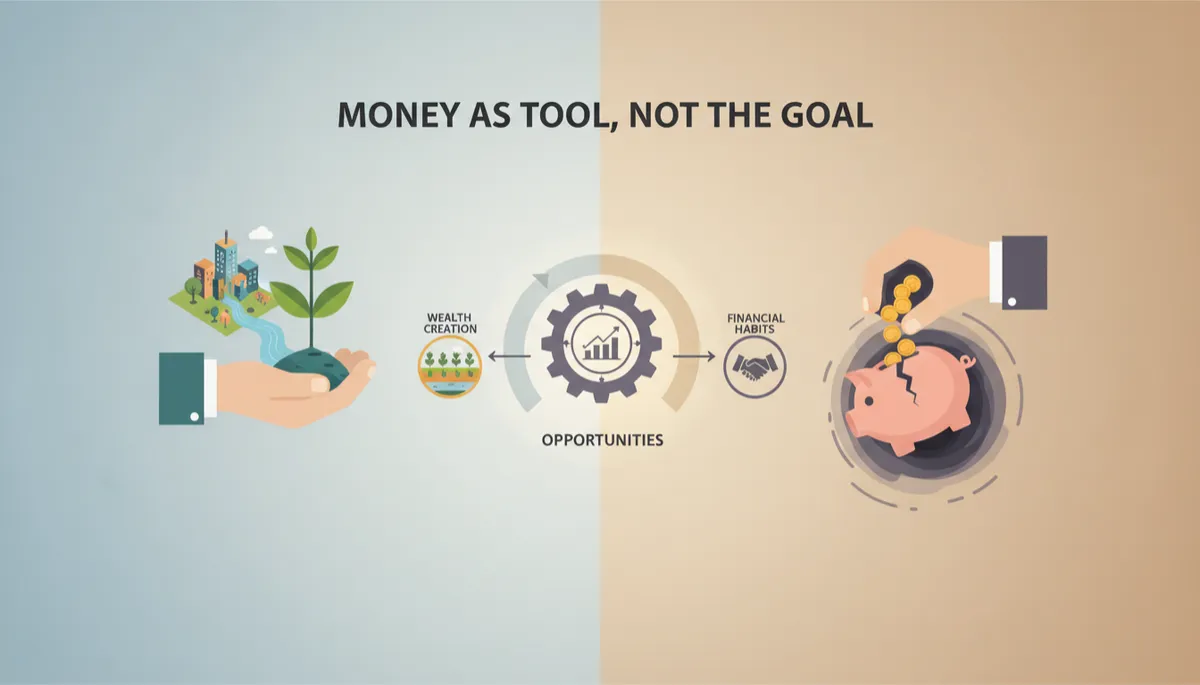
Money as a Tool, Not the Goal: A Stewardship Mindset
Wealth Creation, Financial Habits, Local Business
Money can feel like the finish line: more revenue, more profit, more growth. But what if money isn’t the destination at all—what if it’s the tool that helps you build the business, life, and community you really want? Adopting a stewardship mindset, instead of a consumption mindset, can transform how you approach wealth creation, financial habits, and long-term success. That’s the philosophy at the heart of Big Life Financial, and it’s a powerful shift for any local business ready to grow with purpose.
Stewardship vs. Consumption: Two Very Different Money Stories
Local businesses sit at the heart of every community. You provide jobs, services, and gathering places. Yet when it comes to money, even the most community-minded owners can fall into a consumption mindset without realizing it. In a consumption mindset, the goal is to use money primarily for comfort, lifestyle, and short-term reward. When profits go up, spending usually follows—new car, bigger house, nicer office, more “stuff.” Money becomes a way to prove success rather than to build it.
Stewardship tells a different story. A steward sees money as something entrusted to them—to manage wisely, grow responsibly, and deploy in ways that create lasting value. Instead of asking, “What can I buy with this?” stewards ask, “What can I build with this?” That subtle shift changes everything about how you approach wealth creation and financial habits in your business. Money stops being the scoreboard and becomes the toolkit for impact, resilience, and opportunity—for you, your team, and your community.
📌 Key Takeaway: Consumption focuses on today’s lifestyle; stewardship focuses on tomorrow’s possibilities. The same dollar can either disappear in spending or multiply through wise investment.
Why Local Businesses Need a Stewardship Mindset Now More Than Ever
Local businesses face a unique mix of pressures—rising costs, online competition, changing customer expectations. In that environment, treating money as a tool rather than a trophy is more than a nice idea; it’s a survival strategy. When you embrace stewardship, you start to:
Build reserves that carry you through slow seasons or economic shocks, instead of living month-to-month on thin margins.
Invest in systems, people, and processes that make your business more efficient and valuable over time.
Create opportunities—for new locations, new product lines, or new jobs—because you have capital ready when chances appear.
In other words, stewardship turns your business into an engine for sustainable wealth creation, not just an income source that depends on your constant hustle. That’s the kind of business Big Life Financial encourages owners to build: one that supports a big life, not just a busy one.
Using Wealth to Create Opportunities, Not Just Comfort
When local business owners first begin to see money as a tool, they often ask, “If I’m not just spending it, what should I be doing with it?” The answer lies in opportunity creation. Wealth, stewarded well, opens doors that would otherwise stay closed. It allows you to say “yes” when the right possibilities come along—and “no” when a deal doesn’t fit your values or long-term plan, because you’re not desperate for quick cash.
Here are a few ways local businesses can use wealth to create opportunities instead of just funding consumption:
Invest in your team. Higher wages, training, and benefits can turn jobs into careers. That’s not just good-hearted; it reduces turnover, increases loyalty, and improves service—creating a stronger business and a stronger local workforce.
Upgrade your systems and space. Instead of splurging on personal luxuries, channel profits into better equipment, updated technology, or a more welcoming storefront. These investments can increase capacity, attract more customers, and boost long-term profitability.
Expand strategically. With wise financial habits and healthy reserves, you can open a second location, add a new service, or buy a building instead of renting—moves that build real equity and long-term wealth creation.
Support your community. Sponsoring local events, partnering with nonprofits, or mentoring other small business owners turns your financial success into community momentum. That goodwill often circles back in the form of loyal customers and referrals.

Profits reinvested in people and systems become fuel for long-term growth.
The Role of Financial Habits in a Stewardship-Based Business
A mindset shift is powerful, but it’s the daily financial habits that bring stewardship to life. You don’t become a great steward of your business finances by accident. You get there through consistent, repeatable behaviors that keep you aligned with your long-term goals. Big Life Financial often emphasizes that systems beat willpower; if you build strong financial systems, wise decisions become the default, not the exception.
1. Pay Yourself as the Owner—But with Intention
Many local business owners either don’t pay themselves at all or treat the business bank account like a personal wallet. Both extremes are risky. A stewardship approach sets a reasonable, planned owner’s pay—enough to support your life, but not so much that it starves the business of working capital. When you know exactly what you’ll take home each month, you reduce emotional spending decisions and protect your cash flow. This clarity also helps you separate personal consumption from business investment, which is crucial for healthy wealth creation.
2. Automate Saving and Investing in the Business
Just as personal finance experts recommend “paying yourself first,” local businesses can “pay the future first.” Set up automatic transfers from your operating account into separate buckets:
A reserve fund for emergencies or slow seasons
A growth fund for equipment, marketing, or expansion
A tax fund so you’re never surprised at year-end
When these transfers happen automatically, you’re much less tempted to spend every extra dollar that hits your account. Over time, these disciplined financial habits create the stability and flexibility that define true stewardship.
3. Know Your Numbers and Review Them Regularly
You can’t steward what you don’t understand. Many local business owners avoid their numbers because they feel overwhelming or discouraging. But once you start tracking a few key metrics—monthly revenue, profit margin, cash reserves, debt levels—you gain control. Schedule a monthly money meeting with yourself or your leadership team. Review your financial statements, check progress toward your targets, and ask, “Are we using money as a tool to move us closer to our vision, or are we slipping into consumption?” This simple rhythm builds awareness and accountability into your financial habits.
4. Align Spending with Your Values and Vision
Every dollar that leaves your business is a decision about what matters. A stewardship mindset asks, “Does this expense support our mission, our people, or our long-term goals?” That doesn’t mean you never spend—it means you spend on purpose. Maybe that means choosing a modest office so you can offer better benefits. Maybe it means delaying a personal upgrade so you can buy the building your business operates in. When your financial habits reflect your values, money becomes a powerful ally in building the business and life you want, not a constant source of stress.
💡 Pro Tip: Before any major purchase, ask, “Will this help us serve more people, more effectively, for a longer time?” If not, it may be consumption, not stewardship.
Practical Steps for Local Businesses to Shift from Consumption to Stewardship
Changing your relationship with money doesn’t happen overnight, but it also doesn’t require a complete overhaul on day one. Here are some practical steps any local business can take in the next 90 days to move toward a stewardship-based approach to wealth creation and financial habits:
Define your “Big Life” vision. What are you really building this business for? More time with family? The ability to retire with dignity? A legacy in your community? Write it down. This vision becomes the filter for every financial decision.
Audit your last 3–6 months of spending. Categorize each major expense as either consumption or investment. Be honest. This exercise alone can be eye-opening and often reveals quick wins for better stewardship.
Set clear financial targets. Decide how much you want in reserves, how much profit margin you’re aiming for, and what growth investments you’d like to make in the next year. Targets turn vague hopes into concrete plans.
Create simple systems. Even basic tools—separate bank accounts, automatic transfers, a monthly budget—can dramatically improve your financial habits. You don’t need to be a CFO; you just need a repeatable process.
Get guidance. A partner like Big Life Financial can help you see blind spots, design a stewardship-focused plan, and stay accountable as you implement it. You don’t have to figure this out alone.
The Ripple Effect: How Stewardship Strengthens Your Community
When local businesses adopt a stewardship mindset, the impact reaches far beyond the balance sheet. You create a ripple effect that touches employees, customers, and the broader community. Employees experience greater stability and opportunity when their employer manages money wisely. Customers benefit from improved services, better experiences, and businesses that are still around years down the road. The community gains a stronger tax base, more local philanthropy, and a sense of shared resilience when times get tough.
In this way, your commitment to healthy financial habits and wise wealth creation isn’t just about personal gain. It’s a form of leadership. You’re modeling what it looks like to use money as a tool for good—to build something that outlives your own involvement and continues to create opportunities long into the future. That’s the kind of legacy many business owners dream about, and it starts with how you handle the dollars in front of you today.
Money as a Tool: Bringing It All Together
When you strip away the noise, the core idea is simple: money is a tool, not the goal. For local businesses, that means reframing success from “how much did we make this year?” to “what did we build, who did we help, and how much stronger did we become?” A consumption mindset chases bigger numbers and fancier lifestyles, often at the cost of long-term stability. A stewardship mindset uses every dollar with intention—to strengthen the business, support the people who rely on it, and create new opportunities that wouldn’t exist otherwise.
Adopting this approach doesn’t mean you never enjoy the fruits of your labor. It means you enjoy them in a way that doesn’t sabotage your future. You build a business that can run without your constant presence, that can weather downturns, and that can be passed on, sold, or scaled when the time is right. That’s real wealth creation—the kind that supports a big life, not just big bills.
📌 Key Takeaway: Stewardship is not about having less; it’s about using what you have to create more—more options, more impact, more freedom.
Ready to Build a Bigger Life with Your Business? Big Life Financial Can Help
If you’re a local business owner who’s tired of feeling like money is always chasing you—or slipping through your fingers—it may be time for a new approach. Big Life Financial specializes in helping entrepreneurs like you treat money as a tool for building the life and business you truly want. From clarifying your vision to designing practical financial habits, they work alongside you to create a strategy rooted in stewardship, not just consumption.
Whether you’re in your first few years of business or looking to turn years of hard work into lasting wealth creation, Big Life Financial can help you:
Build a clear, values-based financial plan for your business and personal life
Develop sustainable financial habits that support growth and stability
Turn profits into purposeful investments—in your team, your systems, and your future
Create opportunities for expansion, succession, or eventual exit on your terms
You don’t have to settle for a business that owns your time and energy but never quite delivers the freedom you imagined. With the right guidance and a stewardship mindset, you can transform your relationship with money and build a business that truly supports your “big life.”
Ready to start using money as a tool instead of chasing it as the goal? Connect with Big Life Financial today to explore how a customized, stewardship-focused strategy can help your local business create more opportunity, more stability, and more impact—for you, your family, and your community.
The conversation doesn't end here. Watch the full video for more valuable insights and practical advice.
