
Integrate Tax Planning into Your Financial System
Tax Planning, Financial Management, Business Tax Strategy
Turning Tax Planning Into Part of Your Financial Operating System
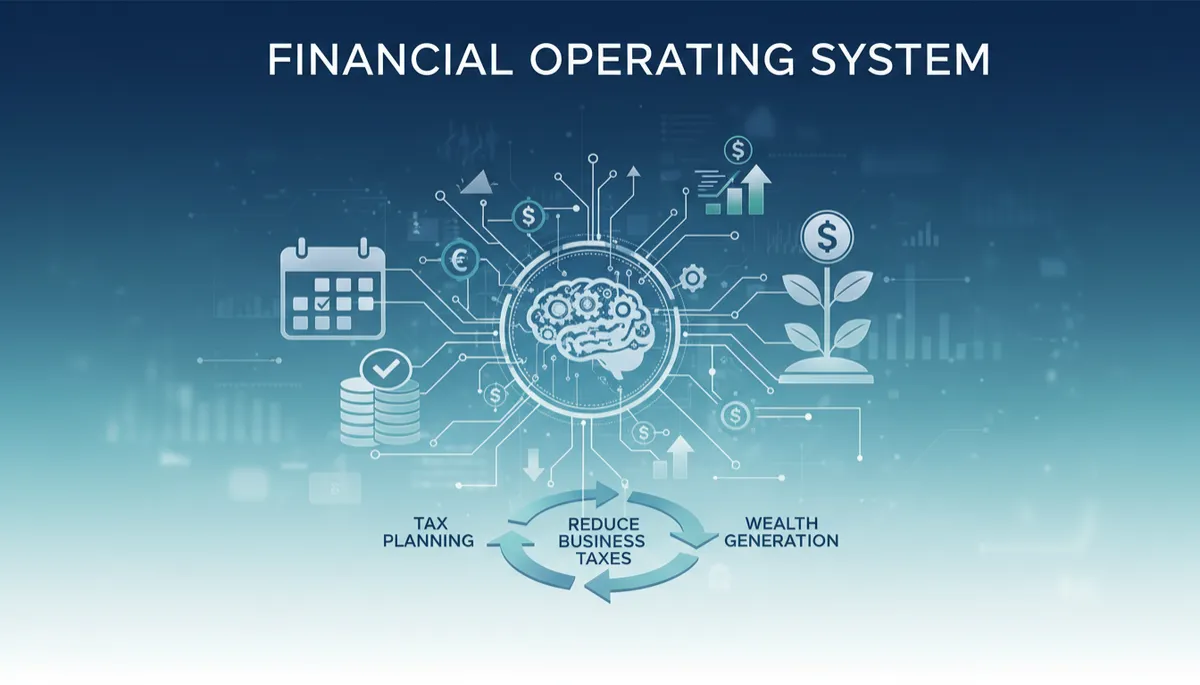
Treating tax planning as a once‑a‑year chore leaves money on the table. When you build tax planning for business owners into a true financial operating system, you not only reduce business taxes, you also turn those savings into long‑term wealth for you and your family.
Why Tax Planning Is a Core Part of Financial Management
Many entrepreneurs see taxes as an unavoidable bill rather than a strategic lever. Yet for most profitable companies, taxes are one of the largest expenses on the income statement. Ignoring them until your accountant asks for documents in March is like building a growth plan and forgetting about pricing. A thoughtful business tax strategy is simply part of good financial management.
At Big Life Financial, we encourage owners to look at every dollar through three lenses: what you earn, what you keep, and how fast it grows. Taxes sit squarely in the “what you keep” category. If you can reduce business taxes by 10–20% year after year, without working more hours, your wealth curve changes dramatically over a decade or two. That is the power of integrating tax planning into your financial operating system instead of treating it as an afterthought.
Think about your current routines. You likely have systems for payroll, invoicing, and cash flow. You may review profit and loss statements each month. But do you review expected tax liability with the same consistency? Do you track how each decision — hiring, equipment purchases, retirement contributions, or entity structure — affects your overall business tax strategy? When you do, tax planning becomes a natural extension of everyday financial decisions, not a scramble at year end.
📌 Key Takeaway: If taxes are one of your biggest expenses, they deserve the same strategic attention as marketing, payroll, and operations in your financial management process.
What It Means to Make Taxes Part of Your Financial Operating System
A financial operating system is the set of routines, tools, and rules that guide how money flows through your business and into your personal life. It includes how you:
Decide where each dollar of profit goes — taxes, savings, reinvestment, or personal distributions
Track key financial metrics like cash reserves, profit margins, and owner’s pay
Make decisions about hiring, equipment, and growth projects
Turning tax planning into part of this system means you deliberately design processes so that tax impact is considered before money moves, not after. Instead of asking your accountant, “What can we do about last year?” you’re asking throughout the year, “How can we structure this to support our business tax strategy and long‑term wealth goals?”
Step 1: Get Clear on Your Tax Baseline and Goals
Before you can build systems to reduce business taxes, you need a clear picture of where you stand today. That baseline becomes the starting point for your business tax strategy.
Calculate your effective tax rate. Look at your last one to three years of returns. Divide total taxes paid (federal, state, and local) by total taxable income. This gives you your effective tax rate as a business owner, which is often much higher than most people realize.
Identify the biggest drivers of your tax bill. Is it self‑employment tax? High pass‑through income? Limited deductions? This helps you target the right levers in your financial operating system.
Set a realistic reduction target. For many small and mid‑sized businesses, trimming 10–30% off the tax bill over time is achievable with smart planning. Even a 10% reduction, repeated for 10 years, can mean hundreds of thousands of extra dollars available for wealth building.
This baseline turns tax planning for business owners into a measurable project, not a vague hope. It also gives your advisors at Big Life Financial a clear target to design around as they help you refine your overall financial management approach.
Step 2: Build Systems for Reducing Taxes (Not Just One‑Off Tactics)
There is no shortage of tax tips online. The challenge is that disconnected tactics rarely add up to a coherent business tax strategy. A system, on the other hand, is a repeatable process that runs with minimal friction. Here are key systems you can embed into your financial operating system to consistently reduce business taxes.
1. Entity and Compensation Structure Review System
Your choice of entity (LLC, S‑Corp, C‑Corp, partnership) and how you pay yourself can dramatically impact your tax bill. Instead of choosing once and forgetting it, build an annual review into your financial management calendar. As profits grow, the ideal structure often changes.
Schedule a yearly strategy session with a tax‑savvy advisor to review whether your current structure still supports your goals.
Evaluate salary vs. distributions, owner benefits, and family employment, all through the lens of your business tax strategy.
2. Ongoing Deduction Capture System
Missed deductions are one of the most common reasons owners overpay. A simple, well‑designed process can capture legitimate expenses as you go, instead of trying to reconstruct them at tax time.
Use a dedicated business card and bank account for all business expenses to keep records clean and audit‑ready.
Implement a monthly “expense sweep” where you or your bookkeeper review transactions for missing categorizations, home‑office allocations, mileage, and reimbursable expenses paid personally.
Create simple rules for what counts as a business expense and educate your team so everyone helps support the system.

Simple monthly routines to capture deductions can save thousands every single year.
3. Tax‑Advantaged Savings and Retirement System
One of the most powerful ways to reduce business taxes is to route profits into tax‑advantaged accounts — retirement plans, health savings accounts, and other vehicles — as part of your regular financial operating system.
Set an annual target for tax‑deductible retirement contributions and break it into monthly or quarterly transfers that run automatically.
Coordinate your retirement plan design (Solo 401(k), SEP‑IRA, SIMPLE, defined benefit, or a combination) with your tax goals and hiring plans.
Use health savings accounts and other fringe benefits strategically as part of your business tax strategy, not as afterthoughts.
💡 Pro Tip: Automating contributions to tax‑advantaged accounts makes it easier to reduce business taxes while steadily building long‑term wealth in the background.
4. Quarterly Tax Projection and Decision System
Instead of waiting until year‑end, build quarterly tax projections into your financial operating system. This is where tax planning for business owners really starts to feel proactive instead of reactive.
At least once per quarter, estimate year‑to‑date profit and expected year‑end income with your bookkeeper or advisor.
Use those projections to adjust estimated tax payments and identify opportunities for strategic equipment purchases, bonuses, or additional retirement contributions.
Document decisions in a simple one‑page summary so you can see how each move supports your overall business tax strategy and financial management plan.
Step 3: Create a Dedicated “Tax Flow” in Your Financial Operating System
Systems are easier to follow when money has a clear path. One of the most practical tools we use at Big Life Financial is a “tax flow” — a dedicated process for moving money from business income into tax, savings, and wealth‑building buckets automatically.
Open a separate tax account. Treat it like a bill‑pay account for the IRS and your state. Each time you run payroll or take owner distributions, transfer a set percentage into this account based on your projected tax rate.
Link your tax flow to your projections. As your quarterly projections change, adjust the percentage going into the tax account. This keeps you from scrambling for cash when payments are due and gives you a real‑time sense of your progress toward your tax goals.
Add a “savings sweep” step. When your actual tax bill comes in lower than what you’ve saved — which is the goal when you reduce business taxes effectively — sweep the surplus into a designated investment or wealth‑building account, not back into general spending.
This simple structure turns your tax planning into a visible, trackable part of your financial operating system. It also creates a built‑in mechanism for turning tax savings into additional wealth instead of letting them disappear into lifestyle creep or unplanned expenses.
Step 4: Turn Tax Savings Into Long‑Term Wealth, On Purpose
Reducing your tax bill is only half the opportunity. The real magic happens when you consistently direct those savings into assets that grow and support your version of a “big life.” This is where tax planning for business owners intersects directly with personal wealth strategy and holistic financial management.
Define a “Destination” for Every Dollar Saved
When your business tax strategy works, you will periodically find that you’ve set aside more for taxes than you ultimately owe. Instead of treating that as a surprise bonus, assign it a job in advance:
A percentage to long‑term investments (brokerage accounts, real estate, or other assets aligned with your risk profile)
A percentage to future business growth projects (new hires, marketing, systems)
A percentage to personal “Big Life” goals (travel, experiences, or meaningful purchases that reflect your values)
By pre‑deciding how these dollars will be used, you turn tax savings into a steady engine for building wealth and funding the life you actually want, rather than letting them get absorbed by higher overhead or lifestyle inflation.
Align Investments With Your Business and Life Timeline
Not every saved tax dollar needs to go into the same bucket. Some should support shorter‑term goals — like building a one‑year cash buffer for the business — while others should be invested for decades. A thoughtful financial operating system matches each pool of capital to the right time horizon and risk level.
Short‑term (0–3 years): Business reserves, opportunity funds, and personal emergency savings, typically in safer, more liquid accounts.
Medium‑term (3–10 years): Investments for goals like a down payment on a building, funding children’s education, or a sabbatical.
Long‑term (10+ years): Retirement accounts, long‑term real estate, and other compounding assets designed to support financial freedom.
When you connect your tax planning, investing, and life goals in one integrated financial operating system, every decision about money becomes simpler and more aligned with your big picture.
Step 5: Build a Support Team Around Your System
Even the best system will stall if you try to do everything yourself. Tax planning for business owners works best when you have a small, coordinated team that understands your goals and your business tax strategy. That team might include:
A proactive tax professional who does more than file returns — they help design strategies throughout the year.
A bookkeeper who keeps your financial data clean, current, and organized so projections are accurate.
A financial consultant, like Big Life Financial, who helps connect the dots between tax planning, business growth, and personal wealth.
The key is coordination. Your advisors should understand your financial operating system, not just their individual piece. When everyone is working from the same playbook, it becomes much easier to reduce business taxes ethically, keep more of what you earn, and channel those dollars into the life and impact you care about most.
Bringing It All Together: Taxes as a Lever, Not a Burden
When you zoom out, turning tax planning into part of your financial operating system comes down to a mindset shift and a few practical habits:
Recognizing that tax planning is a core part of financial management, not a side task for April.
Designing simple, repeatable systems to reduce business taxes: entity reviews, deduction capture, retirement funding, and quarterly projections.
Creating a dedicated tax flow so money moves automatically into tax and wealth‑building accounts.
Intentionally directing tax savings into investments and experiences that support your version of a “big life.”
When these pieces are in place, your business tax strategy stops feeling like a guessing game. Instead, it becomes a predictable, empowering part of how you run your company and shape your future. You are no longer just reacting to the tax code; you are using it as one of many tools in a thoughtful financial operating system designed around your goals.
📌 Key Takeaway: The goal is not to chase every obscure loophole. It is to build a simple, sustainable set of habits that quietly compound your wealth in the background year after year.
If you are ready to move beyond last‑minute tax stress and start treating tax planning as a core part of your financial management, consider what the next 12 months could look like with clear systems in place. With the right financial operating system — and the right partners walking alongside you — taxes can shift from being one of your biggest frustrations to one of your most powerful levers for building a big, meaningful life.
A good conversation can leave you thinking long after it ends. If this article gave you a new idea or perspective, take the conversation with you and spend a few minutes with the video for even more insights worth considering.
