
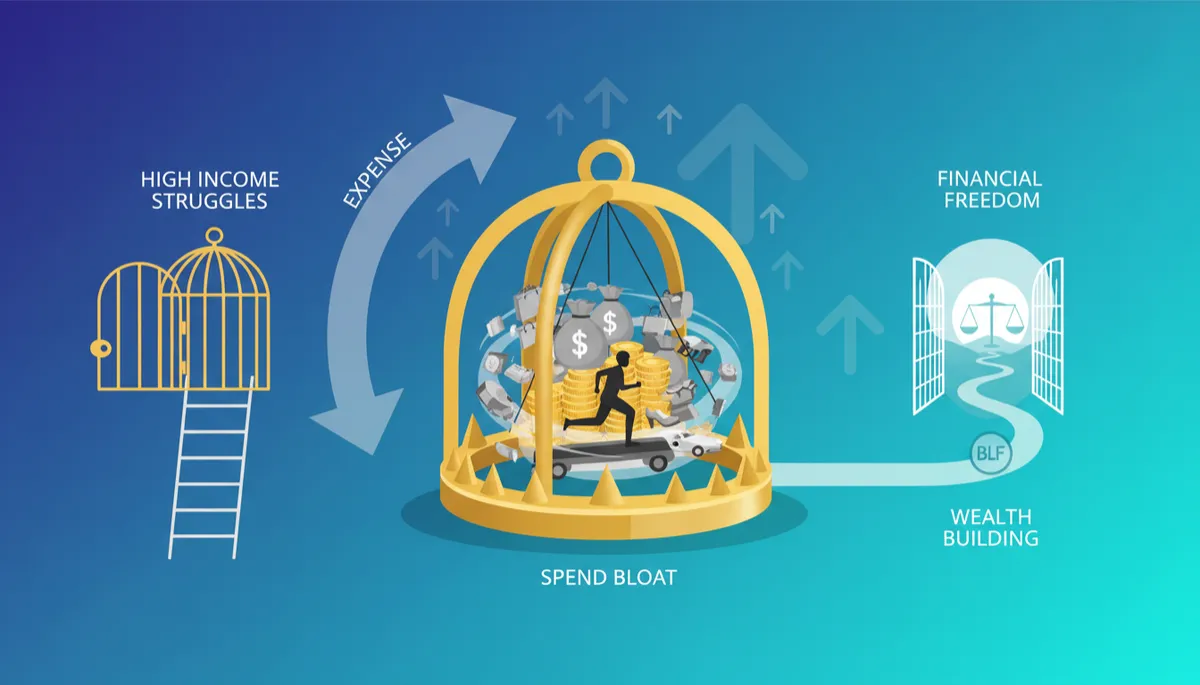
Escape the Income Trap: Build True Wealth
Money Mindset, Wealth Building, Local Businesses
The Income Trap: Why Making More Money Isn’t Making You Wealthy
Many local business owners are working harder than ever, earning more than they imagined a few years ago—yet still feeling broke, stressed, and stuck. This article unpacks why higher income often fails to translate into real wealth building, and how to break out of the income trap for true financial freedom.
When “More Money” Still Feels Like Not Enough
You launched or grew your local business to create more options for your life. Maybe you wanted to provide for your family, pay off debt, or finally feel secure. Now the revenue is higher, the client list is longer, and on paper you’re doing well. Yet your bank account tells a different story.
Cash seems to disappear as fast as it comes in. Taxes hit harder. Your lifestyle has quietly expanded. The business demands more of you, and despite the “success,” you’re not experiencing the financial freedom you expected. This is the income trap—and it’s incredibly common among high-performing local businesses and professionals facing high income struggles.
What Is Spend Bloat? The Silent Killer of Wealth Building
Spend bloat is what happens when your spending quietly expands to match—or even exceed—your income. It rarely shows up as one big, obvious decision. Instead, it’s a series of small, “reasonable” upgrades that accumulate over time and choke your ability to build wealth. It’s the silent enemy of wealth building, especially for driven business owners who feel they’ve “earned” nicer things after years of hustle.
Consider how this plays out in real life:
You move from a modest office to a more impressive space to “reflect your brand.”
You upgrade from a practical car to a luxury vehicle because clients will see it—and because you can finally afford it.
You start eating out more, taking slightly nicer trips, and saying “yes” when family members ask for financial help.
None of these decisions are wrong on their own. The trap is that they happen automatically as income rises, without a deliberate plan for how much of each new dollar goes to lifestyle versus wealth building. Over time, spend bloat devours the very margin you need to become truly wealthy.
📌 Key Takeaway: Spend bloat isn’t about one big mistake; it’s the accumulation of dozens of small, unplanned upgrades that quietly erase your wealth-building potential.
Why More Income Doesn’t Automatically Create More Wealth
For most local business owners, the default strategy for solving money stress is simple: earn more. Need to pay off debt? Earn more. Want to send kids to college? Earn more. Want to retire earlier? Earn more. But without a system, a higher income simply scales your existing habits. If those habits aren’t designed for wealth building, more income just means more expensive problems and bigger numbers moving through your account—without staying there.
Here are three reasons more income doesn’t automatically lead to wealth:
Your brain normalizes income increases fast. That initial excitement when your business has a record month? It fades quickly. What felt like “extra” becomes the new baseline—and your spending adjusts to match. This is classic lifestyle inflation, and it’s a major source of high income struggles.
Expenses scale with complexity. As your business grows, so do software subscriptions, payroll, rent, marketing, insurance, and taxes. Revenue rises, but so does overhead. If you don’t intentionally carve out profit and personal wealth-building contributions, the business will consume everything you give it.
Time poverty replaces money poverty. You may no longer be “broke,” but you’re exhausted. You trade time for money at a higher level, yet still don’t feel free. True financial freedom requires assets and systems that work without you—not just more personal effort.

Without a deliberate plan, higher income is often matched by higher, hidden costs.
Lifestyle Inflation: How High Earners Get Stuck Feeling Broke
Lifestyle inflation is spend bloat in action. It’s the gradual expansion of your lifestyle to match your income. You don’t wake up one day and decide to double your monthly expenses. Instead, you say “yes” to slightly nicer choices, over and over, until you’re locked into a lifestyle that requires your current income level just to stay afloat.
Scenario 1: The Successful Local Service Owner Who Still Can’t Breathe
Imagine a local contractor whose business grows from $150,000 in annual revenue to $450,000 over a few years. The income increase should be life changing. At first, it is: the family moves into a better neighborhood, the kids are enrolled in private school, and there’s a new truck in the driveway with the business logo on the side. The business also takes on more staff, more tools, and bigger jobs.
But with every jump in revenue, fixed costs quietly climb: loan payments, tuition, insurance, payroll, and taxes. There’s always another “necessary” upgrade. Five years later, the owner is making far more than before—but still living paycheck to paycheck. The stress has simply upgraded from “Can I pay the electric bill?” to “What happens if we lose two big clients at once?”
Scenario 2: The High-Earning Professional Couple with No Margin
Consider a local business owner married to a high-earning professional. Together they bring in multiple six figures a year. From the outside, they look like the definition of success: nice home, newer cars, kids in activities, dinners out, and annual vacations. Yet they quietly argue about money. Credit card balances linger. Savings is sporadic. Retirement feels like a vague hope, not a plan.
Their problem isn’t low income—it’s that their lifestyle has expanded to match their earnings. They’ve fallen into the classic high income struggles pattern: impressive revenue, but no clear path to wealth building or financial freedom. They are asset-poor and obligation-rich.
Scenario 3: The Business That Owns Its Owner
Another common trap for local businesses is reinvesting every extra dollar back into the business—new equipment, more advertising, better office, additional staff—without ever paying the owner first. On paper, the business looks successful, but the owner’s personal finances are fragile. Their entire future is tied to one company, in one market, in one economy.
In this scenario, the business becomes the owner’s biggest asset and biggest risk. Without a parallel plan for personal wealth building, there’s no safety net, no passive income, and no real exit strategy. This is the opposite of financial freedom—it’s financial captivity disguised as success.
💡 Pro Tip: If your lifestyle and business both require your current income just to function, you’re not free—you’re trapped at a higher level.
Turning Income into Wealth: A System That Actually Works
Escaping the income trap isn’t about guilt, deprivation, or never enjoying your success. It’s about building a simple, repeatable system that ensures your income consistently feeds your wealth building, rather than your spend bloat. This is where guidance from specialists like Big Life Financial can be transformative—because the right system turns unpredictable progress into predictable results.
Step 1: Define Wealth on Your Terms, Not Someone Else’s
Many local business owners chase income without ever clarifying what “wealthy” actually means for them. Is it a paid-off home? The ability to take a month off without your business collapsing? Enough passive income to cover your basic lifestyle? Until you define financial freedom in concrete terms, you’ll keep moving the goalposts and expanding your lifestyle instead of your net worth.
Decide how much monthly income would make you feel truly secure and free.
Clarify how much time freedom you want: evenings, weekends, vacations.
Identify the assets (not just income) you’ll need to support that life.
This clarity becomes the north star of your wealth building strategy. It also makes it easier to say “no” to lifestyle upgrades that don’t move you closer to real freedom.
Step 2: Pay Your Future Self First—Automatically
The most reliable way to beat spend bloat is to remove willpower from the equation. That means setting up automatic systems where a percentage of your income is directed to wealth building before you ever see it as “spendable.” This is especially powerful for business owners whose income can be irregular or seasonal.
Practical moves might include:
Setting a fixed percentage of every owner’s draw that goes directly into a wealth-building account (not just a generic savings account you dip into).
Automating transfers to tax, emergency, and investment buckets so you’re never surprised or tempted to spend what should be set aside.
Using separate bank accounts for operating expenses, owner’s pay, long-term wealth building, and profit—so you can see clearly where your money is going.
📌 Key Takeaway: If you wait to save and invest “what’s left” after spending, there will rarely be anything left. Automate your wealth building first.
Step 3: Put a Cap on Lifestyle—Then Let Wealth Outgrow It
One of the most powerful moves you can make is to intentionally cap your lifestyle at a certain level, even as your income grows. That doesn’t mean living like a college student forever. It means deciding, “This is enough for our lifestyle right now,” and directing additional income toward financial freedom instead of constant upgrades.
Set a realistic, comfortable monthly lifestyle budget and commit to it for a season (12–24 months).
Channel any income above that cap into debt paydown, asset purchases, or strategic investments that support long-term wealth building.
Revisit the cap periodically, but only raise it when your wealth (not just your income) has grown significantly.
This is where many clients discover that they can maintain a very good life while dramatically accelerating progress toward financial freedom—once they stop letting lifestyle automatically rise with every revenue bump.
Step 4: Build Assets That Work Even When You Don’t
True wealth building is about transforming active income into assets that generate income and security, independent of your daily effort. For local businesses, this often means:
Creating systems and teams so the business can operate profitably without your constant presence.
Building financial assets—such as properly structured policies, cash flow–producing investments, or other vehicles—that grow and protect your capital over time.
Diversifying so you’re not relying on a single stream of income from one business in one location.
Partners like Big Life Financial specialize in helping high earners and local business owners turn income into a coordinated wealth-building strategy—so your money is working for you even when you’re not in the office or on the job site.
Step 5: Protect the Downside So Growth Isn’t Fragile
High income struggles often stem from fear: fear of a downturn, a health event, a key employee leaving, or a major client disappearing. When your lifestyle and obligations are built on maximum income, any disruption can feel catastrophic. Protecting the downside is a crucial part of financial freedom, because it lets you make decisions from a place of strength, not panic.
Maintain a healthy business and personal emergency fund so you’re not forced into high-interest debt when things get bumpy.
Use appropriate insurance and legal structures to shield your family and assets from unexpected shocks.
Build buffers into your cash flow so every month isn’t a tightrope walk.
When your downside is protected, you can pursue opportunities, invest in growth, and make strategic moves without the constant background anxiety that keeps so many business owners stuck in survival mode.
Why This Topic Hits So Deeply for Local Businesses
The income trap is a deeply human, highly relatable experience. Most local business owners didn’t start their companies because they love spreadsheets and tax codes. They started them to create a better life. When they find themselves earning more but feeling just as stressed—or more stressed—than before, it can feel like a personal failure, even though it’s really a systemic issue.
Articles and conversations that acknowledge these high income struggles openly create an instant connection with readers. When you see your own story reflected—the upgraded house, the nicer truck, the growing revenue, and the persistent anxiety—you realize you’re not alone and you’re not broken. You’re simply caught in a pattern that was never designed to lead to financial freedom.
💡 Pro Tip: The most powerful financial conversations don’t start with charts and numbers; they start with your story, your stress points, and your vision for a bigger life.
How Big Life Financial Helps You Escape the Income Trap
Escaping the income trap is less about finding the “perfect” investment and more about designing a coordinated system around your money. That’s where a team like Big Life Financial comes in. Their focus is on helping high earners and local business owners convert income into lasting wealth—without sacrificing the life you’re working so hard to build along the way.
Instead of treating your business, personal finances, taxes, and investments as separate silos, they help you align them into a single, intentional strategy. That includes:
Identifying where spend bloat and lifestyle inflation are quietly draining your ability to build wealth.
Designing automatic systems so a portion of every dollar you earn moves toward financial freedom, not just bigger bills.
Helping you build and protect assets that can support you and your family for the long term, regardless of what happens in the economy or your specific industry.
The result is a path to wealth building that feels aligned with your values, your goals, and your real-world responsibilities as a local business owner. It’s not about getting rich overnight. It’s about steadily reclaiming control over your money and your time—so your business serves your life, not the other way around.
From High Income Struggles to Genuine Financial Freedom
If you recognize yourself in any of these scenarios—rising income, growing stress, and a nagging sense that you “should be further ahead by now”—you are not alone. Many of the most capable, hard-working local business owners are quietly living this exact story. The good news is that your situation is not a life sentence. With a clear strategy and the right support, you can turn your income into a powerful engine for wealth building and financial freedom.
The shift begins when you stop assuming that more income will fix everything, and start designing a system where every new dollar has a job: some for lifestyle, some for security, and a meaningful portion for building the future you actually want. That’s the path out of the income trap—and into the bigger life you started your business to create in the first place.
If you’re ready to stop feeling stuck despite your success, consider partnering with experts who understand both the realities of running a local business and the mechanics of true wealth building. With the right plan, your high income doesn’t have to be a source of stress. It can become the foundation of lasting financial freedom—for you, your family, and the community you serve.
We hope you enjoyed reading this article as much as we enjoyed sharing it. For even more insights and practical guidance, take a few moments to watch the full video and continue exploring the conversation.
