
Build Sustainable Wealth for Financial Freedom
Personal Finance, Sustainable Wealth, Financial Planning
Building Sustainable Financial Freedom: Wealth That Outlives Business Cycles
True financial freedom is not just about hitting a short-term income goal. It is about building Sustainable Wealth that can weather recessions, market booms, and everything in between. In this guide, we will explore how to move beyond the constant chase for more income and instead design a life of lasting long-term security through thoughtful financial planning.
Why Short-Term Income Goals Are Not Enough
Many people equate financial success with hitting a specific income milestone: earning six figures, doubling their salary, or landing a high-paying contract. These are exciting achievements, but they can also be deceptive. Income is a flow, not a foundation. It can rise quickly during good times and disappear just as fast when the economy shifts, industries change, or personal circumstances evolve. Without a deeper focus on Sustainable Wealth, short-term income goals often lead to lifestyle inflation rather than lasting security.
Moving beyond short-term income goals starts with a shift in mindset. Instead of asking, “How much can I earn this year?” begin asking, “How much long-term security am I building?” Income is a tool; wealth is the structure you build with that tool. A high income with no savings, investments, or protection is like building a mansion on sand. It looks impressive until the tide of the next downturn washes in.
💡 Pro Tip: Track two numbers every month: your total income and your net worth. Over time, prioritize decisions that grow your net worth, not just your paycheck.
Redefining Financial Freedom: From Income to Sustainable Wealth
Financial freedom is often portrayed as a number in your bank account or the ability to quit your job. In reality, it is better defined as the ability to live life on your terms without being forced into decisions by money stress. That requires Sustainable Wealth—assets and systems that continue to support you even when your active income drops or stops temporarily. Sustainable wealth is designed to survive and adapt across multiple Business Cycles, not just thrive during the good years.
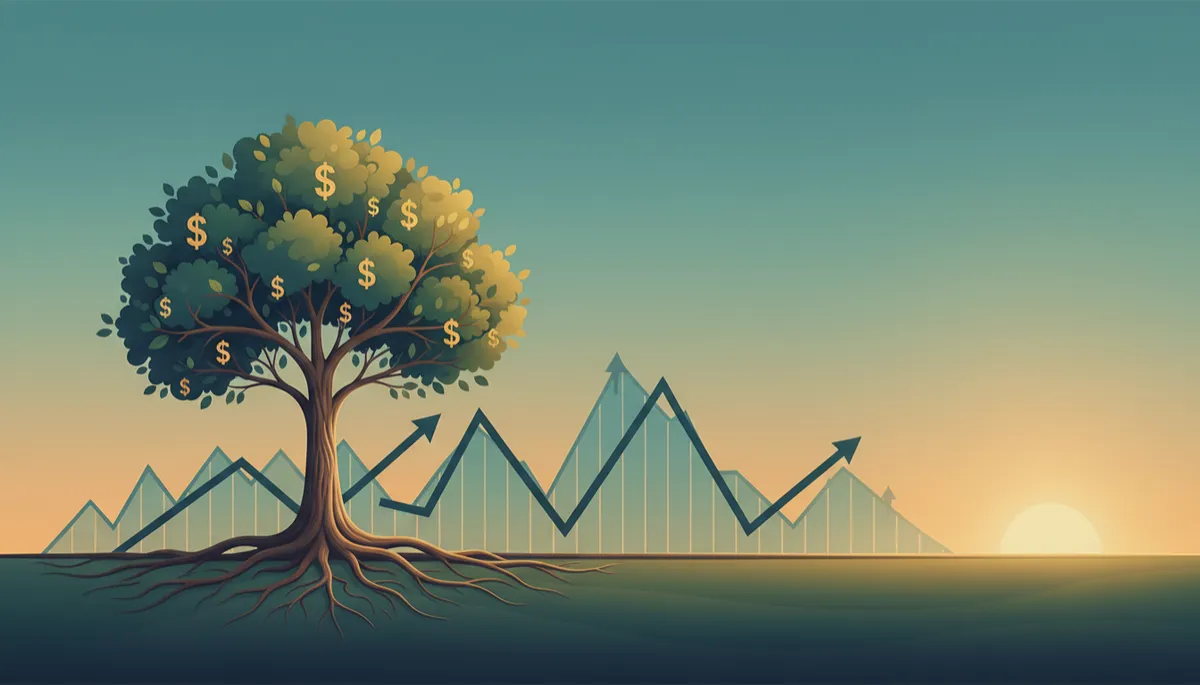
Think of sustainable wealth as a diversified ecosystem rather than a single tree. If all your financial success depends on one job, one business, or one market, you are exposed to concentrated risk. When that one pillar is shaken by a recession, industry disruption, or personal health issue, your entire lifestyle is threatened. By contrast, when your wealth is built on a mix of savings, investments, skills, and income streams, you become far more resilient to external shocks.
Understanding Business Cycles and Why They Matter
Economies naturally move through Business Cycles: periods of expansion, peak, contraction, and recovery. During expansions, jobs are plentiful, businesses grow, and markets often rise. In contractions, also known as recessions, companies cut costs, unemployment rises, and investment values can drop. These cycles are not rare anomalies; they are a recurring feature of modern economies. Building wealth that ignores these cycles is like sailing without acknowledging the existence of storms.
Developing wealth that survives business cycles means planning for both sunshine and rain. During strong economic periods, you use the wind at your back to accelerate saving, investing, and debt reduction. During downturns, you rely on your reserves, diversified assets, and flexible lifestyle to carry you through without panic. This approach is at the heart of long-term security: you expect volatility and prepare for it, rather than assuming endless growth.

Planning for both booms and recessions turns market volatility into a manageable part of your strategy.
The Foundation: A Solid, Boring, Powerful Financial Base
Sustainable Wealth is rarely built on flashy moves. It rests on a quiet but powerful foundation—habits and structures that protect you in bad times and position you to grow in good times. Before chasing higher returns or more complex strategies, focus on these essentials of financial planning:
Emergency savings: Aim for three to twelve months of essential expenses in a safe, accessible account. This is your personal shock absorber during job losses, medical issues, or business slowdowns.
Right-sized living costs: Keeping your fixed expenses manageable—housing, transportation, subscriptions—gives you flexibility when income fluctuates across business cycles.
Smart debt management: Reducing high-interest debt frees up cash flow and lowers your vulnerability during economic contractions.
Basic protection: Adequate insurance and an up-to-date will or estate plan protect your family and your growing wealth from unexpected events.
These steps may not feel glamorous, but they are the bedrock of long-term security. Without them, even impressive investment gains can be wiped out by a single crisis. With them, you gain the confidence to invest, take calculated risks, and build for the future.
Turning Income into Assets: The Engine of Sustainable Wealth
Once your foundation is in place, the next step is transforming income into assets that can support you over time. This is where many people get stuck. They work hard, earn more, and yet feel no closer to financial freedom because their spending rises in lockstep with their income. To build Sustainable Wealth, you need a deliberate plan for capturing a portion of every pay raise, bonus, or business win and turning it into something that lasts beyond the current year.
Assets that contribute to long-term security often include:
Broadly diversified investment portfolios (such as low-cost index funds) that can participate in growth across many sectors and business cycles.
Retirement accounts that benefit from tax advantages and compound growth over decades.
Income-producing real estate, when approached carefully and with proper reserves for vacancies and repairs.
Investments in your own skills, education, and earning potential, which can pay dividends across your entire career.
The key is consistency. A well-designed financial planning system automates this process: a percentage of your income flows directly into savings and investments before it has a chance to be spent. Over time, these steady contributions become the engine of your Sustainable Wealth, compounding quietly in the background while you focus on living your life.
💡 Pro Tip: Decide on a “wealth-building percentage” of your income—10%, 20%, or more—and treat it as non-negotiable, like rent or utilities. Adjust your lifestyle around that commitment, not the other way around.
Diversifying Across Business Cycles: Don’t Bet on Just One Story
Every boom period has a dominant story: a hot industry, a rising asset class, or a “can’t lose” strategy. Tech stocks, real estate, cryptocurrencies, and specific business models have all played this role at different times. While it can be tempting to go all-in on whatever is working now, Sustainable Wealth is built by respecting the reality of business cycles and diversifying accordingly. What leads the market in one decade may lag in the next.
Diversification is not just about owning many things; it is about owning different kinds of things that respond differently to economic conditions. For example, when growth stocks struggle, more stable dividend payers or bonds may help balance your portfolio. When one industry faces disruption, others may be entering a new phase of expansion. By spreading your bets, you reduce the chance that a single downturn wipes out years of progress, and you increase your odds of participating in whatever is growing next.
Protecting Your Plan: Risk Management for Long-Term Security
Building wealth that survives business cycles is not just about growth; it is also about protection. Effective risk management allows you to stay in the game long enough for your strategy to work. Without it, a single event can derail years of effort. This is where thoughtful financial planning becomes essential, integrating protection alongside investing and saving.
Maintain liquidity: Cash reserves and short-term savings accounts help you avoid selling long-term investments at a loss during downturns or emergencies.
Review risk regularly: As you move through life stages, your capacity and willingness to take risk change. Revisit your investment mix periodically to ensure it still matches your goals and time horizon.
Plan for worst-case scenarios: Consider how you would handle a job loss, a major health event, or a prolonged recession. Build safeguards now, while times are stable, so you are not forced into desperate decisions later.
Aligning Money with Meaning: A Sustainable Vision of Freedom
Financial freedom is not only about surviving recessions or maximizing returns. It is ultimately about living a life that feels aligned with your values. When your vision of wealth is purely numerical, it is easy to fall into endless comparison and never feel secure, no matter how much you have. A more sustainable approach is to define what “enough” looks like for you: the lifestyle, experiences, and contributions that matter most.
This clarity shapes your financial planning decisions. Instead of chasing every opportunity, you can focus on the ones that move you toward your personal definition of long-term security and fulfillment. You may choose to work fewer hours once your Sustainable Wealth reaches a certain level, invest more in your community, or fund creative projects. The point is not to accumulate money for its own sake, but to use it as a tool to build a stable, meaningful life—one that is not constantly at the mercy of the latest business cycle.
A Practical Roadmap: From Today’s Income to Tomorrow’s Sustainable Wealth
Bringing all of this together, here is a simple roadmap you can adapt to your own situation. It is not a quick fix, but a long-term approach to building Sustainable Wealth that can endure through many business cycles:
Clarify your vision of financial freedom. Write down what long-term security means to you in concrete terms—housing, work, family, lifestyle, and contribution.
Audit your current position. List your income sources, expenses, debts, savings, and investments. Calculate your net worth and your average monthly surplus or shortfall.
Build or reinforce your foundation. Establish an emergency fund, reduce high-interest debt, and right-size your fixed living costs to create resilience across business cycles.
Automate wealth-building. Set up automatic transfers to savings, retirement accounts, and diversified investments every time you are paid. Increase contributions whenever your income rises.
Diversify thoughtfully. Avoid concentrating all your wealth in one asset, industry, or business. Use diversified funds and multiple income sources to spread risk.
Review and adapt. At least once a year, revisit your financial plan. Adjust for changes in your life, the broader economy, and your evolving goals for Sustainable Wealth.
Build Once, Benefit for Decades
Moving beyond short-term income goals is not about ignoring today’s needs; it is about refusing to let them be the whole story. When you shift your focus from “How much can I earn this year?” to “How can I create Sustainable Wealth that supports me for decades?”, your daily financial choices begin to change. You become more intentional about saving, investing, and protecting what you build. You start to see business cycles not as threats, but as natural phases you can prepare for and even use to your advantage.
Lasting financial security does not come from predicting the future; it comes from designing a plan that can handle many possible futures. With a strong foundation, diversified assets, and clear priorities, you can build wealth that not only survives recessions and market swings, but continues to support the life you want to live. That is the essence of true financial freedom: a calm, resilient relationship with money that endures far beyond any single paycheck, trend, or cycle.
This is where the reading ends, but the ideas can keep going. Take a few minutes to watch the video and hear more of the thoughts, experiences, and lessons behind the topic.
