
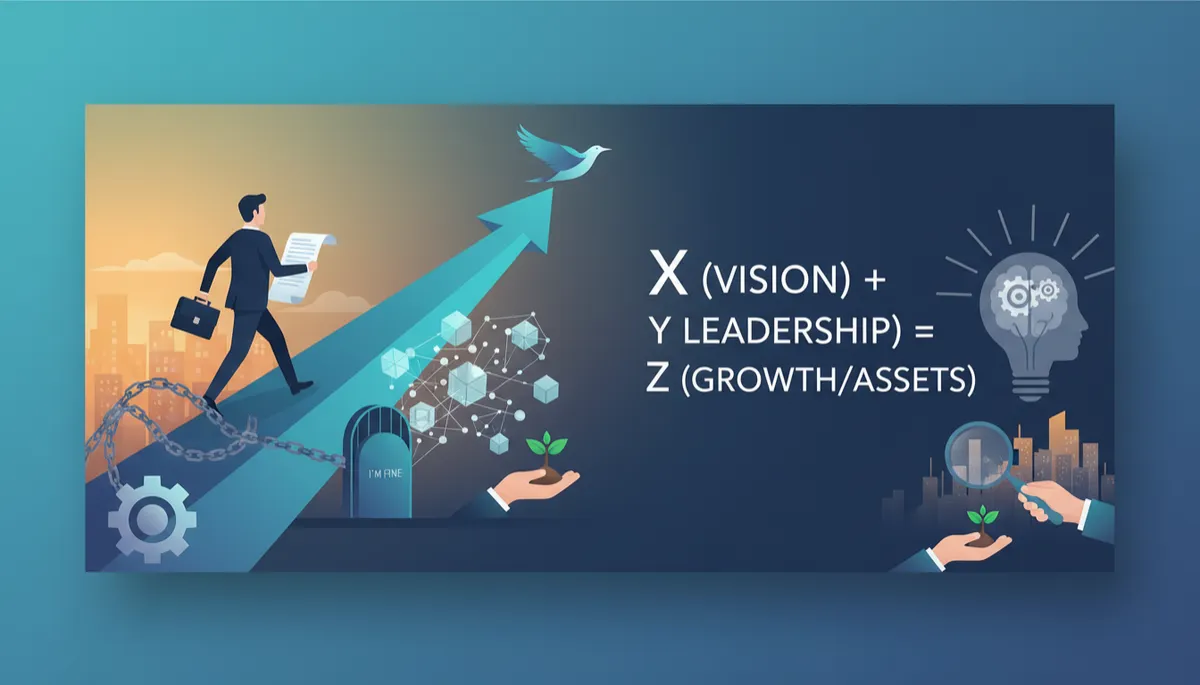
Break Free from the 'I'm Fine' Business Trap
Local Business, Leadership, Entrepreneur Mindset
From Operator to Investor: How to Break Free from the “I’m Fine” Business Trap
Many local business owners quietly carry the weight of the world on their shoulders. On the surface, everything looks “fine.” The doors are open, customers are coming in, and the bills are (mostly) getting paid. But behind the scenes, there’s a different story: long hours, constant pressure, and a business that falls apart if you step away for more than a few days. This article explores the hidden mindset trap behind “I’m fine,” why it keeps you stuck on a financial treadmill, and how to shift from being the indispensable operator to a true investor who owns scalable, independent assets.
The Hidden Mindset Trap Behind “I’m Fine”
For many owners, “I’m fine” is not a status update; it’s a defense mechanism. It sounds harmless, even responsible. You tell your spouse, your team, your accountant, and yourself that everything is okay. Revenue is steady, the phone rings, and you’ve been in business for years. By most outside measures, you’re doing well.
But “I’m fine” often hides a deeper reality:
You’re exhausted, but you don’t feel you have permission to admit it.
You’re worried about money, but you don’t want to look weak or ungrateful.
You know the business depends on you, but you tell yourself that’s just how it is.
The trap is subtle: as long as you say “I’m fine,” you don’t have to confront how fragile your business and personal life actually are. You avoid uncomfortable questions like, “What happens if I get sick?” or “Could this business run without me?” That avoidance keeps you locked into the same patterns, year after year.
💡 Pro Tip: If you catch yourself saying “I’m fine” while secretly feeling stressed, overwhelmed, or trapped, treat it as a signal—not a verdict. It’s a sign that something needs to change, not proof that you should just push harder.
The Financial Treadmill: Busy, But Going Nowhere
When you live in the “I’m fine” mindset, you often end up on what can be called the financial treadmill. You’re constantly moving, constantly working, but not truly progressing toward freedom or security. Your income may rise over the years, but so do your responsibilities, overhead, and expectations. The treadmill speeds up; you just run faster.
Key signs you’re on the financial treadmill:
If you stop working, the money stops coming in—almost immediately.
Vacations are rare, and when you do take one, you spend it on your phone or laptop putting out fires.
Your savings and investments don’t match the years of effort you’ve put in.
The financial treadmill is dangerous because it feels productive. You’re busy, your calendar is full, and you can point to all the work you’ve done. But activity is not the same as progress. Without a plan to build assets that generate income without your constant presence, you’re simply trading time for money at a slightly higher level than a job—and with more risk.
Why Most Businesses Depend Too Heavily on the Owner
Most local businesses are built on the owner’s back. At the start, that’s natural. You are the salesperson, bookkeeper, manager, and problem-solver. The issue is that what worked to get the business off the ground becomes what holds it back as it grows.
Common reasons businesses overdepend on the owner include:
Owner as bottleneck: Every decision, from hiring to refunds, runs through you. Your team can’t move without your approval, so they wait—and you drown in decisions.
No documented systems: The “system” lives in your head. You train by shadowing, not by process. That makes you the only person who truly knows how everything works.
Fear of delegation: You’re afraid others will drop the ball, upset customers, or waste money. So you keep doing it yourself, reinforcing the belief that only you can do it right.
The result is a business that looks successful from the outside but is structurally fragile. If you’re not there, everything slows down, quality drops, and revenue suffers. Instead of owning a business, you own a job with overhead.
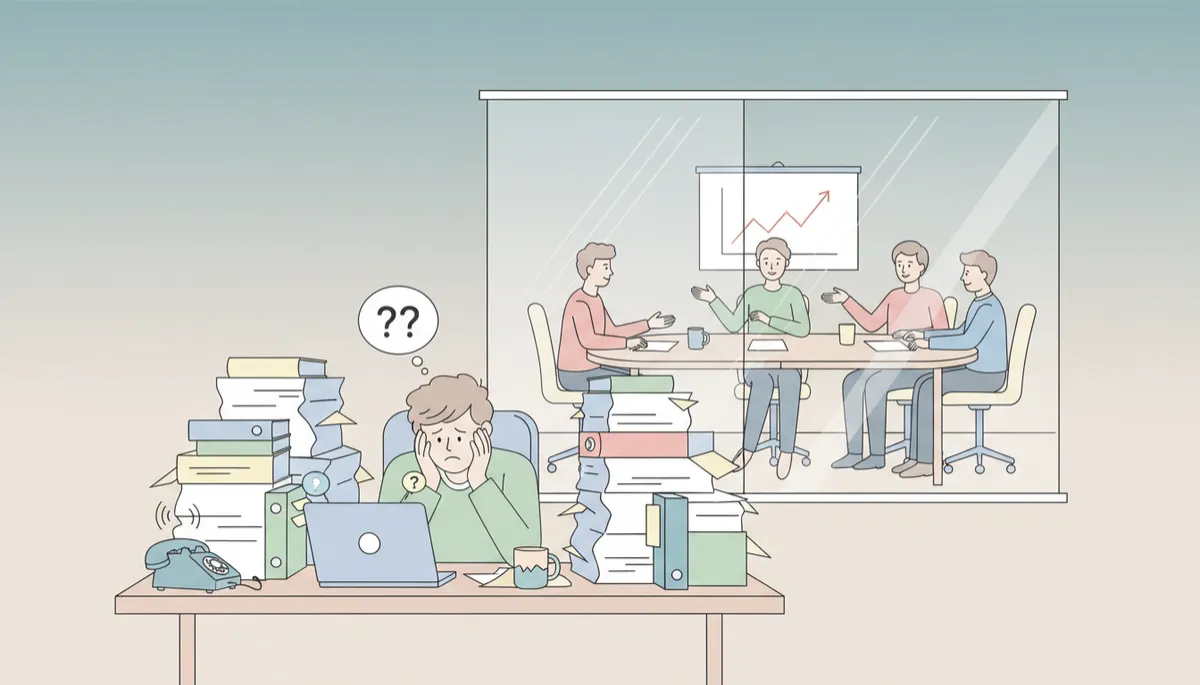
Overdependence on the owner turns growth into stress instead of freedom.
X + Y = Z: Vision-Driven Growth Instead of Endless Grind
To escape the “I’m fine” trap, you need a simple but powerful shift: move from survival-driven work to vision-driven growth. One way to think about this is through the formula X + Y = Z.
In this context:
X = Your Vision: The clear, specific picture of the future you want—financially, personally, and professionally. This includes how much you want to work, what you want your role to be, and what kind of life you want your business to support.
Y = Your Growth Strategy: The concrete plan to get there: systems, people, and scalable assets. This is where you decide what you will build, delegate, and invest in.
Z = The Business Outcome: A company that runs with or without you, generates consistent profit, and can be sold or passed on as a real asset.
Most owners skip straight to Z: “I want more money,” “I want the business to run itself,” or “I want to sell someday.” But without X (a clear vision) and Y (a deliberate strategy), Z never materializes. You end up reacting to daily fires instead of designing your future.
📌 Key Takeaway: Vision-driven growth means your daily decisions are aligned with a bigger picture. Every hire, system, and investment is chosen because it moves you closer to a business that can thrive without you—not just survive because of you.
From Running a Business to Owning Scalable Assets
There is a crucial difference between running a business and owning scalable assets. When you run a business, you are the engine. When you own assets, the business is the engine—and you own the machine. Your job is to design, maintain, and improve it, not to be every moving part inside it.
Scalable assets in a local business might include:
Documented processes and systems that allow others to deliver consistent results without your constant oversight.
A strong brand and reputation that brings in customers regardless of whether they meet you personally.
Recurring revenue streams—memberships, service contracts, subscriptions—that keep cash flow stable without new sales every day.
When you build these assets, your business becomes more like a portfolio investment and less like a demanding job. You can step back without everything collapsing. You can sell it for a meaningful multiple because buyers see a functioning system, not just a personality brand tied to your name.
Achieving Operational Independence Through Hiring Leadership
One of the most powerful levers for turning your business into an asset is operational independence—the ability for the business to run day-to-day without you. The key to this is not just hiring more staff; it’s hiring leadership.
Operational independence comes from building a leadership layer that can:
Make decisions within clear guidelines without asking your permission for everything.
Manage people, performance, and customer issues so you’re not the default firefighter.
Own key functions—operations, sales, finance—so the business can scale beyond your personal capacity.
This often means hiring roles like a general manager, operations manager, or head of sales who can take full ownership of their area. Yes, it’s an investment. Yes, it can feel risky. But the greater risk is remaining the only leader in your company. Without leadership beneath you, you will always be the ceiling on growth.
💡 Pro Tip: Start by documenting what you actually do in a week. Then ask, “Which of these responsibilities could a capable leader own if I hired and trained them well?” That list becomes the job description for your first key leadership hire.
Shifting Identity: From Indispensable Operator to Strategic Investor
Building leadership and systems is not just a structural change; it’s an identity shift. Many owners are secretly proud of being indispensable. It proves they are hardworking, loyal, and committed. Letting go of that identity can feel like a loss, even if it leads to more freedom and wealth.
To move from operator to investor, you must redefine what success looks like:
Instead of measuring your value by how many hours you work, measure it by the quality of decisions you make and the assets you build.
Instead of being proud that “nothing happens without me,” be proud that “everything runs well without me.”
Instead of solving every problem personally, invest in people and systems that solve problems consistently.
A strategic investor asks different questions: “What is the return on this hire?” “How can I make this process repeatable?” “What would make this business more valuable to a buyer?” These questions pull you out of the day-to-day and into the role of architect and owner, not just worker.
The Real Risks of Staying Stuck: Divorce, Death, Disability, and More
It’s uncomfortable to talk about, but essential: staying in the “I’m fine” trap carries serious, real-world risks. When your business depends on you for everything, your personal life and your company are one accident away from crisis.
Consider just a few scenarios:
Divorce: Long hours, constant stress, and financial uncertainty put enormous strain on relationships. When your business consumes your time and energy, your partner and family often get what’s left over. Over time, that can lead to resentment, distance, and, in too many cases, divorce—with all the emotional and financial fallout that follows.
Disability: An injury, illness, or chronic condition could suddenly limit your ability to work the long hours you’re used to. If the business cannot function without you, revenue may drop at the exact moment your personal expenses rise.
Death: If something happens to you, what happens to your spouse, children, or partners? A business that only works with you at the center often has little resale value. Instead of leaving a legacy, you may unintentionally leave behind a mess.
These are heavy topics, but they highlight a crucial truth: building operational independence and scalable assets is not a luxury—it’s a responsibility. It protects you, your family, your team, and your customers. It ensures that your years of sacrifice actually result in something durable and valuable, not just a worn-out owner at the end of the road.
Why This Approach Works: Solving the Pain Behind “I’m Fine”
The reason shifting from operator to investor is so powerful is that it addresses the real pain most local business owners quietly carry: the fear that all their hard work will not lead to true freedom, security, or impact. The “I’m fine” trap numbs that pain but never resolves it. This approach confronts it directly and offers a path forward.
By focusing on vision-driven growth (X + Y = Z), building leadership, and designing your business as an asset, you:
Turn unspoken anxiety into a clear plan.
Replace constant firefighting with predictable systems and capable people.
Trade a fragile, owner-dependent income stream for durable, transferable value.
This is why owners who make this shift often report not just higher profits, but better sleep, improved relationships, and a renewed sense of purpose. They’re no longer pretending to be “fine.” They’re building something that truly is.
Encouraging the Mindset Shift: Your Next Steps
Breaking free from the “I’m fine” trap starts with a decision: to be honest with yourself about where you are, and intentional about where you’re going. You don’t have to overhaul everything overnight. But you do need to begin thinking—and acting—like a strategic investor in your own business, not just its hardest-working employee.
Here are practical steps to start the shift:
Admit where “I’m fine” isn’t true. Take an honest inventory: Where are you exhausted, scared, or frustrated? Where does the business fall apart without you?
Clarify your vision (X). Define what you want your life and business to look like in 3–5 years. How much do you want to work? What role do you want? What income and freedom do you need?
Design your growth strategy (Y). Identify the systems, leadership roles, and recurring revenue streams that would move you toward that vision. Prioritize one or two to start.
Hire or grow leadership. Look inside your team for potential leaders to elevate, and consider where you may need to bring in outside experience. Your goal is to remove yourself from at least one major function in the next 12 months.
Measure progress like an investor. Track not only revenue and profit, but also how often the business runs smoothly without you, and how many key processes are documented and delegated.
Each step you take in this direction reduces your risk, increases your freedom, and builds real value. You begin to own not just a business, but a scalable, resilient asset.
Final Thoughts: You Deserve More Than “Fine”
Local business owners are some of the most resilient, creative, and hardworking people in any community. You carry the responsibility of jobs, customers, and families—often with little recognition. But you did not take that risk just to be “fine.” You started your business to create opportunity, freedom, and a better future.
Breaking free from the “I’m fine” trap is not about admitting failure; it’s about finally giving yourself permission to build the kind of business—and life—you truly wanted when you began. By shifting your mindset from operator to investor, embracing vision-driven growth (X + Y = Z), building leadership, and designing scalable assets, you transform your business from a demanding job into a powerful engine for wealth, impact, and security.
You don’t have to stay on the financial treadmill. You don’t have to carry it all alone. You can create a business that thrives without you—and a life that feels better than “fine.” The first step is to stop saying “I’m fine” and start asking, “What would it take for this business to truly run without me?” Then, one decision at a time, start building that future.
We hope you found this article helpful. For more insights and practical advice, watch the full video and continue the conversation.
